



How to Stay Healthy While on Antibiotics

Sometimes, antibiotics are the only line of defence against a bacterial infection. They work by either killing infection-causing bacteria or preventing them from reproducing, depending on the antibiotic class. Your healthcare provider typically prescribes antibiotics only when they are clearly needed and when the benefits outweigh the potential risks.
While most antibiotics target a specific type of infection, others are broad-spectrum. Broad-spectrum antibiotics are often used when the likely cause is unclear or when there is no precise treatment for a particular infection.

The main issue is that antibiotics-particularly broad-spectrum antibiotics-can also wipe out important harmless bacteria that live in the body, such as the gut microbiome. This disrupts the balance in the digestive tract. As a result, you might experience undesirable symptoms such as:
- Diarrhoea
- Nausea
- Loss of appetite
- Indigestion
- Bloating
- Abdominal pain
If these symptoms are severe, if you notice blood in your stool, or if you develop a high fever or signs of dehydration, seek medical care promptly.
Healthcare professionals often recommend adding a probiotic diet, supplements, or both to your antibiotic regimen. Here's why.
What are Probiotics and Why Do People Take Them with Antibiotics?
As noted earlier, antibiotics are vital for treating bacterial infections, but they can also upset your digestive tract, as reflected by the symptoms listed above. Sometimes, even after you finish the course of antibiotics, the gut may take a long time to return to normal.
Fortunately, even while taking antibiotics, there are options that may help support and restore your gut ecosystem and overall health. One option is probiotics.
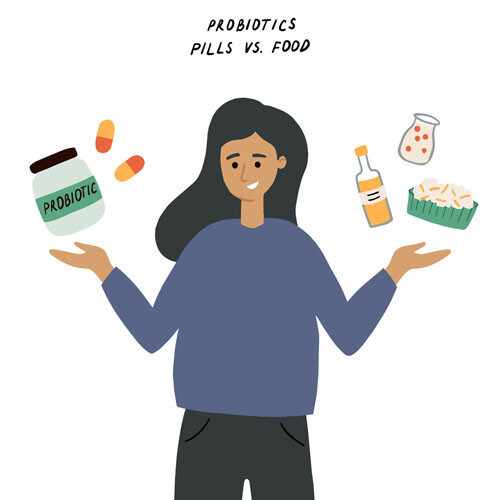
Put simply, probiotics are beneficial microorganisms found in the gut that are linked to optimal body function. Probiotic supplements contain billions of these useful microorganisms, which can help maintain or restore balance in the digestive system.
These beneficial microorganisms may help counteract some negative effects of antibiotics by replacing bacteria that have been reduced. They help restore the normal balance of important bacteria in the body. Examples of helpful probiotics include strains of Lactobacillus, Bifidobacteria, and Saccharomyces (a useful yeast).
Probiotics, whether as foods or supplements, may be taken during or after an antibiotic regimen. However, people who are seriously unwell, immunocompromised, pregnant, or living with chronic health conditions should check with a healthcare professional before starting probiotic supplements.
Probiotics vs. Prebiotics
In short, prebiotics are food for beneficial bacteria in the gut microbiome (probiotics). Like any organism, bacteria need a food source-this is what prebiotics provide. Consuming prebiotics before or after taking an antibiotic may help restore gut balance. Foods and ingredients that contain prebiotics include:
- Bananas
- Garlic
- Onions
- Chicory root
- Garlic
- Jerusalem artichokes
In addition, some manufactured foods contain added prebiotics, including:
- Cereals
- Yoghurt
- Bread
- Infant formula
When checking food labels for prebiotics, look for terms such as:
- Galactooligosaccharides (GOS)
- Chicory fibre
- Fructooligosaccharides (FOS)
- Inulin
- Oligofructose (OF)
Caveat: Most prebiotics are dietary fibres. Consuming them in large quantities may cause bloating.
Probiotics that Pair Well with Antibiotics
| Probiotic bacteria | Probiotic foods and fermented drinks | Prebiotic foods |
|---|---|---|
| Bifidobacteria |
|
|
| Lactic acid bacteria (Lactococcus and Lactobacillus) |
|
|
Although some foods contain probiotics and/or prebiotics, the amounts are often small and may not be enough to ease antibiotic-related symptoms, particularly when symptoms are more pronounced. However, clinicians commonly recommend pairing probiotic supplements with a supportive diet.
When Should You Take Probiotics?
Many people wonder whether probiotics should be taken alongside antibiotics or after the treatment is over. Either approach may be suitable, depending on your preferences and how quickly you want to support your gut microbiome. However, experts strongly advise against taking them at exactly the same time. Otherwise, the antibiotic may also destroy the bacteria you are trying to introduce with probiotics.
It is usually better to take probiotics a few hours before or after an antibiotic dose. For example, if you take an antibiotic in the morning and evening, you may take probiotic supplements around the middle of the day. A general rule of thumb is to take probiotics between daily antibiotic doses. This timing gives the antibiotic more time to move through the gut before you introduce beneficial bacteria.

In addition, dietitians and clinicians often recommend continuing probiotics and prebiotics for at least 1-2 weeks after finishing an antibiotic regimen. This is because the effects of medicines on gut microbiota can persist for a period after the course ends.
Remember that the main reason to avoid taking probiotics and antibiotics at the same time is that antibiotics may reduce the effectiveness of probiotics. Other than that, there is no chemical interaction between the two.
Probiotic supplements generally have an excellent safety profile. Rare, minor side effects have been reported, including diarrhoea, constipation, thirst, bloating, flatulence, rash, abdominal pain, vomiting, and nausea. If you experience severe or unusual symptoms after starting a probiotic, stop taking it and contact a healthcare professional.
What Symptoms of Antibiotic Use Can Be Reduced with Probiotics?
Many symptoms associated with antibiotics may improve or resolve with probiotics, but probiotics are not a cure-all. Even so, many people feel more comfortable using probiotics than they would without them.
Probiotics may be taken to help prevent antibiotic-related symptoms or to help ease them once they occur. If you have experienced these effects before, or you want to reduce the risk of problems during a course of antibiotics, you may consider adding probiotics to your treatment. At the same time, do not stop or change an antibiotic without first checking with the clinician who prescribed it.
If you are already experiencing side effects and want to help restore normal digestive function, probiotics may also be helpful. Potential problems that probiotics may help address include:
1. Antibiotic-associated Diarrhoea (AAD)
One of the most common unwanted effects of antibiotic regimens is diarrhoea, affecting about 1 in 3 people who take these medicines. As described earlier, antibiotics can destroy both beneficial and harmful bacteria in your system. Beneficial bacteria in the intestine play a crucial role in supporting health, and reducing them can lead to a range of issues.
Beneficial gut bacteria help with water absorption and maintaining firmer stools. They also help keep opportunistic bacteria such as Clostridium difficile (C. diff) in check. When the gut microbiome is disrupted, C. diff can multiply, causing infection and producing toxins that may lead to inflammation and diarrhoea.
Probiotics may help replace beneficial bacteria in the gut, supporting the processes that help maintain normal stool. One research review of 17 studies reported that probiotics could significantly reduce the likelihood of developing AAD.
2. Stomach Pain
As with diarrhoea, stomach pain may occur when antibiotics suppress normal gut flora. Inflammation associated with overgrowth of C. diff may cause painful abdominal cramps. In mild cases, symptoms may last up to 2 weeks after treatment. In severe cases, symptoms may continue for weeks after the medication.
To help reduce these unwanted effects, you may consider taking probiotics alongside your antibiotic regimen and including the complementary foods mentioned earlier.
So, what can you do if you are experiencing stomach pain?
- Try applying a hot pack, as you would for cramps
- this can be a hot water bottle or a heat pack
- this may help relax the stomach.
- Warm up some chamomile tea
- this herbal remedy may help ease inflammation
- it may soothe the stomach.
- Drink rice water
- this may create a soothing barrier in the stomach lining
- Warm up some ginger tea
- it may help with nausea and relax the muscles in your intestinal tract
- it may also help with stomach cramps.
These home remedies, alongside probiotics, may help with mild stomach pain. Home remedies can ease mild discomfort, but severe or worsening pain, fever, vomiting, or an inability to keep fluids down requires prompt medical evaluation.
3. Nausea
Medicines such as erythromycin and aspirin are known to cause nausea. Other medicines (such as ibuprofen, a non-steroidal anti-inflammatory drug, and nifedipine, a blood pressure medicine) may also trigger vomiting. In some cases, nausea reflects how a medicine works. For example, pain medicines such as Vicodin and Percocet interact with the part of the brain responsible for nausea and vomiting.
With antibiotics, nausea is often linked to digestive upset. This can be more common in older people, whose digestive systems may hold medication longer before fully absorbing it across the digestive tract.
Experts recommend taking probiotics with antibiotics to help restore gut flora. This may help support gut function during antibiotic treatment. If nausea is intense or prevents you from taking your medicines as prescribed, call your healthcare provider; the timing, dose, or medication may need to be adjusted.
4. Bloating
Bloating is often linked to disruption of the normal balance of the gut microbiome. Antibiotics may lead to overgrowth of less desirable bacteria in the small intestine. As a result, you may experience bloating even after finishing a course of antibiotics.
This situation may require probiotics to help re-establish healthy gut bacterial balance, or it may require a medication change.
Probiotics are not a one-size-fits-all solution, but they may help support restoration of healthy digestive function. If symptoms are not improving after you add supplements to your treatment, discuss this with your doctor.
How to Take Probiotics Correctly
When pairing probiotics with antibiotics, it is generally best to take probiotics a few hours after the antibiotic dose to improve their chance of survival. However, antibiotics are not the only challenge beneficial bacteria face. They also need to survive stomach acid long enough to reach the lower parts of the gut.
This is important because stomach acidity is influenced by several factors, including whether the stomach is empty or full. During fasting (when you are very hungry), gastric pH will most likely range between 1.7 and 2, which is highly acidic.
By contrast, pH typically rises after a meal, making the gut less acidic. However, food intake also triggers the release of digestive enzymes into the stomach, and these enzymes may also damage probiotics.
Taking probiotics alongside a heavy meal may also slow digestion. This can delay the movement of beneficial bacteria to the lower parts of the gastrointestinal (GI) tract. Longer transit time also means probiotics are exposed to stomach acid and digestive enzymes for longer.
For timing, it may help to have a small amount of food in your stomach rather than taking probiotics on a completely empty stomach or with a heavy meal. Another way to determine the best timing is to consider why you are taking probiotics in the first place.
If you are trying to address digestive issues (such as bloating and diarrhoea), you may want to take them with each meal. If you are trying to improve sleep quality, you may prefer to take them before bed. Experts are beginning to identify links between probiotics and the sleep-wake cycles.
Your daily routine also matters. People who wake early may prefer to take probiotics in the morning, while people who stay up late may prefer to take them later in the day.
Also remember to pair probiotics with prebiotic fibres (such as onions, garlic, leeks, jicama, and dandelion greens) or other prebiotic foods such as yoghurt and fermented grains when possible. These can help create an environment that supports beneficial bacteria.
Probiotics and Prebiotics Timing
| Reason/daily schedule | Best time to take your probiotics | Best time to take your prebiotics |
|---|---|---|
| Stomach problems (diarrhoea, nausea, cramps, pain) | With a meal | As part of meals |
| Insomnia | Before bed | Before bed |
| Working at night | In the evening | In the evening, as part of a meal |
The Best Cheap Probiotics We Recommend
Which probiotic is best to take with commonly prescribed antibiotics such as Amoxil, Avelox, Cipro, Chloromycetin, or Zithromax?
After focusing on affordability, here are three probiotics that we believe are not only useful for antibiotic prophylaxis, but also inexpensive and easy to fit into your daily routine. These are examples of products commonly used for gut support; they are not the only acceptable choices.
1. Yogut:
Yogut® capsules may help your body restore its normal gut organisms and flora. As discussed in this article, some antibiotics can cause side effects, including diarrhoea, and Yogut® capsules may be useful in helping to manage these symptoms.
2. PrePro:
PrePro® capsules are commonly used for bowel problems. As a result, they may suit people living with IBS, constipation, diarrhoea, and other common problems associated with taking antibiotics. They may also be beneficial for eczema.
3. Pro-Wel
Pro-Wel® sachet is used for gastric ulcers, among other gastrointestinal conditions. It contains an active probiotic composite with multiple bacterial strains, which are intended to support balance in the gut mucosa.
These probiotics may be helpful options for some people, but they are not right for everyone. Always talk with your doctor, pharmacist, or another qualified healthcare professional before starting a new probiotic, especially if you are pregnant, older, taking multiple medicines, or living with a chronic health condition.