It's common to get cold-like symptoms at certain times of the year. Sneezing, a blocked nose, watery eyes and a runny nose are some of the most common. When you or your children have symptoms like these, you might wonder whether they're related to the weather.
In many cases, though, they're caused by what's often called "hay fever" - seasonal allergies. While there are different types of allergy, seasonal allergic rhinitis is especially common. It happens when spores and pollen from plants, flowers and trees are in the air we breathe.
In some people, these particles, known as allergens, trigger the immune system to release histamine and other chemicals into the bloodstream. Histamine is what causes the symptoms mentioned above.
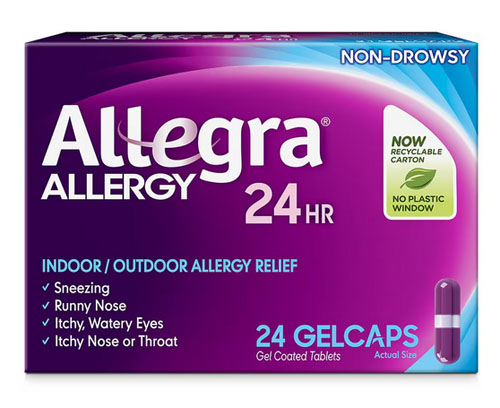
Antihistamines can help counter the effects of histamine in the body. Allegra (fexofenadine) is a well-known medicine in this group. It helps relieve the symptoms mentioned above in both children and adults. Allegra is not only used for allergies, though. It is also used to treat urticaria and other conditions. Allegra is sold over the counter and is also available as a generic medicine.
In this article, we'll look at Allegra in detail. You'll learn what it's used for, the recommended dose, and possible Allegra side effects. This information can help you decide whether this medicine may be suitable for you and, if so, how to use it properly.
In Australia, Con Stough, PhD, Professor, has conducted studies of fexofenadine.
What Is Allegra (Fexofenadine)?
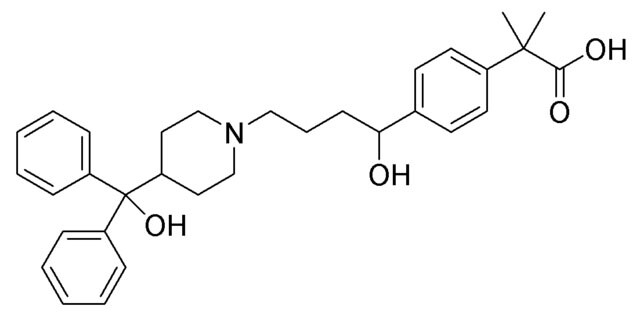
People often ask, "What is this medicine?" and "What is Allegra usually used for?" Allegra is a non-drowsy (second-generation) antihistamine that contains the active ingredient fexofenadine (C32H39NO4). This chemical compound has a molar mass of 501.667 g/mol and belongs to the group known as H1 blockers or H1 antagonists. Allegra is used to treat seasonal allergies, urticaria and other immune system reactions.
Another common question is, "How long does Allegra normally take to work?" Broadly speaking, it starts working within about 30 minutes. Its effect usually peaks between 1 hour and 2 hours after taking a dose. What does Allegra do while it is working? In simple terms, this medicine blocks the effects of histamine in the body. It helps relieve symptoms, but it does not cure the underlying cause.
Allegra can be used by both adults and children and is sold over the counter. This means you can buy it without a prescription. However, children's Allegra may be prescription-only.
If you buy this medicine without a prescription, make sure you read and understand the instructions in the pack. Do not take it unless you are completely sure what the right dose is for you. If you are unsure, ask your pharmacist.
Allegra is sold as tablets, including standard tablets and orally disintegrating tablets. More details are given in the next subsection. There is also an oral suspension, which is the paediatric dosage form. In most cases, this medicine is taken twice daily. However, one dosage form is taken once daily. It is not recommended to continue using it for more than 5 consecutive days.
Another question people often ask is, "What is the best antihistamine?" or "Is Allegra the best antihistamine?" Most antihistamines on the market are effective. They all work against the effects of histamine. However, if avoiding drowsiness is important, Allegra may be a better option.
Dosage Forms
As mentioned above, Allegra comes in 3 different dosage forms. They can all be bought in practically any Australian pharmacy. Below is a more detailed description of each commercially available dosage form.
Tablets
Allegra is available as regular tablets in 2 different strengths of the active ingredient. They are sold over the counter under the brand names "12 Hour Allegra" and "24 Hour Allegra". In both cases, the active ingredient is fexofenadine hydrochloride (HCl).
You may notice that the word "hydrochloride" has been added to the name of the active ingredient compared with what was mentioned earlier. Here is a brief explanation. Many medicines are originally made as either a weak acid or a base. In many cases, however, the human body cannot absorb the medicine well in either of these forms. Poor absorption would make the medicine less useful because it would not have the intended effect.
To improve poor absorption, a medicine in acid or base form can be converted into a salt form through chemical processes. A salt form can also improve how well the medicine dissolves. Dissolution is the process by which the medicine is released from the dosage form, such as a tablet, into the body.
So, pure fexofenadine is chemically converted into fexofenadine HCl to improve its water solubility and bioavailability. This helps the antihistamine be absorbed in the gastrointestinal tract and distributed quickly through the bloodstream.
As you might expect, 12 Hour Allegra contains less fexofenadine HCl than 24 Hour Allegra. The former contains 60 mg per tablet, while the latter contains 180 mg. Each tablet also contains other inactive ingredients. You can find the full list of ingredients on the packaging. 12 Hour Allegra is sold in packs of 24 tablets, while 24 Hour Allegra comes in packs of 20 tablets.
The same 180 mg strength of fexofenadine HCl is also available as "24 Hour Allegra Gelcaps". This dosage form is sold in packs of 24 gelcaps. The inactive ingredients are different from those in the standard tablets, so for the full list of ingredients for this particular dosage form, check the packaging or the instructions inside.
Knowing the ingredients in a particular dosage form can be important for several reasons. A doctor can help determine whether the medicine is suitable for you. They can also check whether any of its ingredients could interact with other medicines you are taking. It also helps when assessing the risk of allergic reactions or other complications.
Oral suspension
Children's Allegra is sold as an oral suspension. As mentioned above, this dosage form is not sold without a prescription. In this form, the active ingredient is the same - fexofenadine HCl - but the strength is lower. This dosage form contains 30 mg per 5 ml. Along with the active ingredient, the suspension contains several inactive ingredients. As in the previous cases, check the instructions inside the pack for the full list of ingredients.
Doctors in Australia recommend confirming which form of fexofenadine is appropriate before use.
Oral disintegrating tablets
There is another dosage form for both children and adults that may be easier to take and dissolve. These are orally disintegrating tablets, which melt in the mouth. They are recommended for children who cannot swallow standard tablets. Each orally disintegrating tablet contains 30 mg of fexofenadine HCl. This dosage form is sold in packs of 12 orally disintegrating tablets.
Indications
For your safety, before taking Allegra, make sure you understand how to use it. This is especially important if you buy it without a prescription, which may be possible in pharmacies. If a doctor prescribes it, you must take Allegra exactly as directed.
If you have kidney disease, a doctor should decide whether fexofenadine is suitable for you. It is also a good idea to tell them about any other health conditions you have, such as diabetes. To help avoid interactions, tell your doctor about all other medicines you are taking.
If you are giving the suspension to your child, shake the bottle well first. Measure the dose in millilitres using a proper measuring device, such as a measuring spoon. Do not use a household teaspoon or any other device that does not show the correct dose. A smaller dose may not work properly, while a larger dose increases the risk of overdose.
It is generally best to take all dosage forms without food. However, the regular tablets and the suspension can be taken with food if you prefer. The orally disintegrating tablets must always be taken without food and on an empty stomach.
In general, you do not need any liquids. However, if needed, you can drink a glass of water. Do not use natural or artificial juices with this dosage form, as they may interfere with absorption of the active ingredient.
Dosage Considerations
If a doctor prescribes Allegra, they will decide the best dose for you based on several factors. These include your age, clinical condition, body weight and response to fexofenadine. The doctor will also recommend the most suitable dosage form for you in Australian clinical practice. If you choose to buy Allegra over the counter, follow the directions on the pack.
For regular 12 Hour Allegra tablets, the doses are as follows:
- Children +12 y.o. and adults: 1 tablet every 12 hours (2 tablets a day);
- Children -12 y.o. must not use this medication;
- Adults +65 y.o. and patients with kidney problems must consult a physician to ensure that this medication is safe in their particular cases in Australia.
For regular 24 Hour Allegra tablets, the doses are as follows:
- Children +12 y.o. and adults: 1 tablet every 24 hours (1 tablet a day);
- Children -12 y.o. must not use this medication;
- Adults +65 y.o. and patients with kidney problems must consult a physician to ensure that this medication is safe in their particular cases.
The same directions also apply to 24 Hour Allegra Gelcaps.
For the oral suspension, the doses are as follows:
- Children +12 y.o. and adults: 10 ml every 12 hours (20 ml a day);
- Children between 2 and 12 years of age: 5 ml every 12 hours (10 ml a day);
- Children -2 y.o., adults +65 y.o., and patients with kidney problems must consult a physician to ensure that this medication is safe in their particular cases.
For orally disintegrating tablets, the doses are as follows:
- Children +12 y.o. and adults: 2 tablets every 12 hours (4 tablets a day);
- Children between 6 and 12 years of age: 1 tablet every 12 hours (2 tablets a day);
- Children -6 y.o., adults +65 y.o., and patients with kidney problems must consult a physician to ensure that this medication is safe in their particular cases.
The orally disintegrating tablets must be taken on an empty stomach.
In all cases, do not take more or less than the indicated dose, and do not continue treatment for longer than directed. Doing so will not give better or faster results and may be harmful to your health. Taking a higher dose increases the risk of Allegra side effects. If your condition does not improve after treatment, or gets worse, see a doctor straight away.
Before taking this medicine
Allegra is suitable for many people in most cases. However, to reduce the risk of Allegra side effects or a severe allergic reaction, do not take it if you are allergic to fexofenadine. Also, speak to a doctor in the following situations.
Ask a doctor before use
If you have kidney disease or have had it in the past, speak to a doctor before taking Allegra. If you have diabetes, ask whether this medicine is suitable for you. Orally disintegrating tablets and oral suspension contain aspartame, which may not be suitable for people with diabetes. Also, tell your doctor about all other medicines you are taking and whether you are due to have surgery soon.
If pregnant or breast-feeding
Tell your doctor if you are pregnant or planning to become pregnant soon. There may be risks to the unborn baby if Allegra is taken during pregnancy. Your doctor will weigh up whether the benefits of using this medicine outweigh the risks. A doctor should also decide whether Allegra is suitable for you if you are breast-feeding. Fexofenadine can pass to a newborn through breast milk.
What happens if I miss a dose
If you miss a dose, take it as soon as you can. However, if it is nearly time for the next dose, skip the missed dose. In most cases, you do not need to follow a strict schedule. Never take a double dose to make up for a missed one, as this may lead to overdose.
What happens if I overdose
If an overdose is suspected, seek medical attention immediately. See a doctor if you develop symptoms such as a dry mouth, dizziness or drowsiness. Get emergency medical help straight away if you have difficulty breathing or feel faint. In Australia, call triple zero (000) in an emergency.
How should I take Allegra?
As mentioned above, always follow your doctor's instructions for taking Allegra. Otherwise, follow the directions on the pack. Do not take any antacid within 15 minutes before or after taking any dosage form. These medicines can interfere with absorption of the active ingredient. Likewise, do not drink natural or artificial juice with Allegra.
Take the regular tablets with a glass of water. Do not take them with juice, as this can reduce how well the tablet works. Swallow the tablet whole without chewing or biting it. For the liquid dosage form, shake the bottle before taking the dose.
The orally disintegrating tablets need a little more care. Follow these directions:
- Do not remove the tablet from its blister until you are ready to take it;
- When you are ready to take the dose, remove the tablet carefully so you do not damage it. Make sure your hands are dry when you do this;
- Place the tablet on your tongue. It will start dissolving with your saliva, without the need for water;
- Do not chew, bite or swallow the tablet whole. Let it dissolve on its own;
- Swallow as the tablet is dissolving. If needed, you can drink some water. Do not drink any other type of liquid.
Ideally, you should take this dosage form at least 1 hour before a meal. Alternatively, you can take it 2 hours after eating.
Side Effects
Like any other medicine, Allegra can cause unwanted effects. Some side effects may be mild and go away on their own, while others may require urgent medical attention. The doctor prescribing this medicine will always weigh up the benefits and risks. In most cases, you will not experience serious side effects.
Side effects not requiring immediate medical attention
You may be experiencing mild side effects if you:
- Start coughing or develop flu-like symptoms;
- Have fever, headache and/or chills;
- Have diarrhoea, nausea or another stomach problem;
- Feel drowsy or tired;
- Have menstrual cramps or back pain;
- Have muscle pain.
Other unwanted effects may also occur, even if they are not listed above. In most cases, these effects go away quickly and do not need medical attention. However, if these side effects do not go away after a few days, you should see a doctor. Likewise, if any of the above problems get worse, stop taking Allegra and seek medical advice.
Side effects requiring immediate medical attention
You should seek emergency medical attention if you notice symptoms of an allergic reaction to Allegra. Although a serious allergic reaction (anaphylaxis) to fexofenadine is very uncommon, it can be life-threatening if it occurs. Go to hospital straight away if:
- You develop a rash, hives or itching;
- You have difficulty breathing;
- Your face, lips or tongue start to swell;
- You feel severely dizzy.
Call emergency services if you cannot get to hospital straight away on your own.
What other drugs will affect Allegra?
The interaction between antacids and Allegra was mentioned earlier. To allow a proper assessment, tell the doctor in Australia about any other medicines you may be taking. These include prescription medicines, non-prescription medicines, dietary supplements and herbal products. You should also tell them about any recreational drugs you use regularly or occasionally.
Medicines that cause sleepiness are especially important when checking for possible interactions. Tell your doctor if you take sleeping tablets, painkillers, sedatives or similar medicines. Also let them know if you have a mental health condition and take medicine for it. Likewise, avoid drinks with a high alcohol content while you are being treated with Allegra.
Storage
Always keep Allegra out of the reach of children. Store this medicine in a dry place at room temperature between 20°C and 25°C (68°F and 77°F). Discard the medicine if the blisters, carton or bottle are open. Check the expiry date as well, and discard any medicine that has expired.