Budez CR capsules deliver budesonide 3 mg in a controlled-release form designed to act mainly in the ileum and ascending colon, which limits systemic steroid exposure compared with standard oral corticosteroids. We stock this prescription corticosteroid in packs of 30, 60, 90 and 180 capsules.
This tool only estimates pack size from the values you enter.
×
You need: 21 capsRecommended packs: 1 x 30 = 30 caps
Manufacturers
AstraZeneca ABDr. Falk Pharma GmbHFerring Pharmaceuticals Inc.Tillotts Pharma AG
Payment & Delivery
Package Example
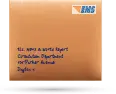
Your order is carefully packed and ships within 24 hours. Here is what a typical package looks like.
Sized like a regular personal letter (approximately 24x11x0.7 cm), with no indication of what is inside.
Front View
Side View
Back View
Delivery Times
Delivery Method
Estimated delivery
Express Free for orders over A$456.00
Estimated delivery to Australia: 4-7 days
Standard Free for orders over A$304.00
Estimated delivery to Australia: 14-21 days
Payment Methods
Discount Coupons
Australia Day - 26 January 2026 10%AUSDAY10
Labour Day - 2 March 2026 6%LABOUR6
ANZAC Day - 25 April 2026 8%ANZAC8
King's Birthday - 8 June 2026 7%KING7
Boxing Day - 26 December 2026 12%BOXING12
Brand Names
Also known as (by country):
Country
Brand Names
Australia
BudenofalkEntocort
FAQ
Oral budesonide modified-release capsules are prescription-only medicines in Australian pharmacies. Under our store policy, Budez CR 3 mg controlled-release capsules can be ordered without a prescription and sent by mail. Our store ordering policy is separate from the medicine's Australian prescription classification.
Do not use a capsule if its blister or other protective packaging is torn, punctured, opened or otherwise compromised. Protection from moisture and light may have been affected, even if the capsule looks normal. Keep the package for assessment and arrange a replacement or refund if the parcel arrived damaged.
Not necessarily. Capsule colour, size, markings, packaging and inactive ingredients can differ between products with budesonide. The supplied product's exact manufacturer, appearance and imprint should be confirmed from the received package rather than assumed from a reference brand.
Store the capsules below 25°C, protected from light and moisture. Keep them in their tightly closed original container. Do not use capsules that have become wet, damaged or visibly altered without having them checked.
Pregnancy and breastfeeding both require an individual medical assessment. During pregnancy, oral budesonide is generally used only when the expected benefit for active bowel disease outweighs potential risks to the fetus; prolonged corticosteroid exposure may also require consideration of newborn adrenal effects. Budesonide passes into breast milk in small amounts, but data for oral controlled-release capsules are limited, so the lowest effective dose and observation of the infant should be discussed with the prescriber.
These 3 mg controlled-release capsules are taken by mouth, usually swallowed whole with water. Do not crush or chew them, as this can interfere with controlled release. They may generally be taken with or without food, but the dose and treatment duration depend on the condition being treated.
Description
Note:
Images in the description are provided for informational purposes and may differ from the actual appearance of the product. Please refer to the product name, strength, active ingredients, and dosage form.
Budez CR is a controlled-release oral capsule containing 3 mg of budesonide, a corticosteroid formulated to act mainly within the lower small bowel and the beginning of the large bowel. It is used by adults, and in some older children, for mild to moderate Crohn's disease affecting the ileum and ascending colon, and for microscopic colitis. Because the capsule releases its contents gradually and locally, it offers many of the anti-inflammatory benefits of a corticosteroid while reducing some of the whole-body steroid exposure seen with older tablets such as prednisolone. Anyone considering Budez CR usually does so after a gastroenterologist has confirmed the diagnosis and location of bowel inflammation, since the capsule's design only works well for disease in a specific part of the gut.
What Budez CR Is
The active ingredient, budesonide, belongs to a group of medicines known as corticosteroids (sometimes called glucocorticoids). Budez CR supplies it as a controlled-release capsule taken by mouth, in a single available strength of 3 mg. Each capsule contains granules coated so that the budesonide is protected through the stomach and upper small bowel, then released progressively as it reaches the terminal ileum and ascending colon. This is different from ordinary oral corticosteroids, which dissolve quickly and act throughout the body, and from inhaled or nasal budesonide products used for asthma or hay fever, which target the airways rather than the bowel.
Crohn's Disease and Microscopic Colitis in Brief
Crohn's disease is a chronic inflammatory bowel condition that can affect any part of the digestive tract, though it frequently involves the ileum and the start of the colon. Typical symptoms include abdominal pain, diarrhoea, fatigue and weight loss during active flares. Microscopic colitis is a different condition in which the colon looks normal on standard examination but shows inflammation under the microscope, typically causing chronic watery diarrhoea without visible bleeding. Both conditions can significantly affect daily life during a flare, which is why controlling bowel inflammation, rather than simply easing individual symptoms, is the main treatment goal.
How Budez CR Works
Once released in the ileum and ascending colon, budesonide binds to glucocorticoid receptors in the bowel lining, reducing the production of inflammatory chemical messengers and easing swelling, irritation and excess fluid secretion in the affected tissue. A key pharmacological feature of budesonide is that most of what is absorbed into the bloodstream is broken down rapidly by the liver on its first pass, so far less active steroid reaches the rest of the body compared with an equivalent dose of prednisolone. This first-pass effect is the main reason budesonide capsules are associated with fewer classic steroid side effects, although some systemic corticosteroid activity still occurs, particularly with higher doses or long-term use.
What the Evidence Shows
Clinical studies in people with mild to moderate Crohn's disease limited to the ileum and ascending colon have shown that controlled-release budesonide can bring on remission in a majority of patients over a treatment course of around eight weeks, with efficacy broadly similar to standard oral corticosteroids but a lower rate of typical steroid-related side effects such as marked weight gain or a rounded face. In microscopic colitis, budesonide is recognised as an effective option for settling chronic watery diarrhoea during an active episode, and lower doses are sometimes continued afterwards to reduce the chance of relapse in people who tend to flare repeatedly. As with any corticosteroid, the improvement is generally linked to the duration of use, and symptoms can return once treatment stops, particularly in more relapsing forms of these conditions.
Capsule Design and Swallowing
The capsule shell and the coated granules inside it are engineered specifically to delay and target release; this is not simply a matter of taste or convenience. The capsules should normally be swallowed whole with water, and the pellets must not be chewed or crushed. If swallowing is difficult, open the capsule only when the leaflet for the exact supplied product permits it or after confirming the method with a pharmacist or prescriber; the pellets must remain intact. People who have difficulty swallowing capsules should discuss alternative formulations with their doctor rather than altering how the capsule is taken.
Who Budez CR Is Generally Used For
Budez CR is generally prescribed for adults with active, mild to moderate Crohn's disease involving the ileum and/or ascending colon, and for adults with microscopic colitis causing troublesome diarrhoea. Established paediatric use is limited to older children and adolescents, broadly from around eight years of age, with Crohn's disease in the same bowel location, using age- and weight-adjusted dosing, a restricted treatment length, and monitoring of growth and adrenal function. It is not generally used for extensive Crohn's disease affecting other parts of the bowel, for severe or fulminant flares needing urgent systemic treatment, or as a long-term substitute for disease-modifying therapies in complex disease.
Strengths, Packs and General Dosing Principles
Budez CR is supplied only as a 3 mg controlled-release capsule, and we offer it in packs of 30, 60, 90 or 180 capsules, allowing a course to be matched to the length of treatment a doctor has recommended. Dosing is generally structured around an induction phase to settle active disease, followed by either stopping treatment or, in some cases, continuing at a lower dose to help prevent relapse.
Treatment phase
Typical general approach
Induction (active Crohn's disease or microscopic colitis)
A higher total daily dose, often taken once daily in the morning or divided through the day, for around six to eight weeks
Dose reduction
Gradually stepped down rather than stopped abruptly, particularly after several weeks of treatment
Maintenance (selected patients)
A lower total daily dose, sometimes given daily or on alternate days, to reduce the chance of relapse
These figures describe general principles rather than a specific prescription; the exact dose, schedule and treatment length should always follow the prescriber's instructions, since they depend on disease severity, response, body weight in younger patients, and liver function.
Elimination and Half-Life
After swallowing, budesonide is absorbed gradually as the capsule's coating breaks down along the bowel, and is then metabolised extensively by the liver, mainly through the CYP3A4 enzyme pathway, into compounds with little remaining steroid activity. Its elimination half-life from the blood is short, typically only a few hours, and the resulting inactive metabolites are cleared mainly through the kidneys. Because of this rapid hepatic clearance, budesonide does not accumulate significantly in the body with normal dosing, although people with significant liver impairment can have higher and more prolonged systemic exposure and may need closer monitoring.
Before Starting Budez CR
Contraindications
Budez CR should not be used by anyone with a known hypersensitivity to budesonide or any capsule excipient. It is not intended for situations where rapid, whole-body corticosteroid action is required, such as a severe or fast-deteriorating flare, since its local, delayed-release design works more slowly than a standard oral or intravenous steroid.
Pregnancy, Breastfeeding and Age Groups
Use during pregnancy requires an individual clinical assessment weighing the benefit of controlling active bowel disease against a potential, generally low, risk to the developing baby, including a theoretical risk of reduced adrenal function in the newborn if used close to delivery. Budesonide passes into breast milk in small amounts, so breastfeeding while taking it should be discussed with a doctor. Established use in children is limited to older children and adolescents with Crohn's disease as described above, and is not established for younger children. Older adults can generally use budesonide capsules, though age-related reductions in liver or kidney function, and a higher background risk of bone thinning or diabetes, may warrant closer monitoring.
Driving and Everyday Activities
Budesonide capsules are not expected to cause drowsiness or otherwise impair the ability to drive or operate machinery, so most people can continue their usual activities while taking them, provided they otherwise feel well.
Prescription Status and Ordering
In Australia, oral controlled-release budesonide capsules are a prescription-only (Schedule 4) medicine, meaning a doctor's assessment and diagnosis are required before this treatment is appropriate for anyone. Our checkout for this listing does not require you to upload a prescription before we accept your order, and our pharmacist-supported team is available online and by phone around the clock if you have questions about the product before or after ordering. This ordering approach is separate from the medicine's legal status in Australia, and starting or adjusting a corticosteroid for bowel disease is something best done under the guidance of the doctor who diagnosed the condition.
Interactions With Other Medicines, Food and Habits
Because budesonide is broken down mainly by the CYP3A4 liver enzyme, medicines that strongly inhibit this enzyme can raise budesonide levels in the blood and increase the risk of steroid side effects. Examples include certain antifungal medicines (such as ketoconazole or itraconazole), some antibiotics such as clarithromycin (available from our range as Biaxin), and some antiviral medicines used for HIV. Grapefruit and grapefruit juice can have a similar effect and are generally best avoided while taking this medicine. Taking budesonide alongside other corticosteroids, whether oral, inhaled or topical, adds to total steroid exposure and should only be done under medical supervision. Regular use of nonsteroidal anti-inflammatory medicines can add to gut irritation, and diuretics that lower potassium may increase the risk of low blood potassium when combined with a corticosteroid. People taking anticoagulants or diabetes medicines may need extra monitoring, since corticosteroids can affect blood clotting tests and blood glucose control.
Side Effects and What to Do
Most people tolerate budesonide capsules reasonably well, especially compared with standard oral corticosteroids, but side effects can still occur.
Beyond the effects shown there, prolonged or repeated courses of any corticosteroid, including budesonide, can contribute over time to bone thinning, changes in mood, elevated blood pressure, or a higher chance of infection, which is why treatment length and any repeat courses are usually reviewed by a doctor. Stopping a corticosteroid abruptly after an extended course, rather than tapering as directed, is one of the more important risks to avoid, since the body's own adrenal glands may need time to resume normal steroid production.
Suspected Overdose
Taking more capsules than prescribed on a single occasion is unlikely to cause a sudden, life-threatening reaction, but it can increase the usual side effects and adds unnecessary steroid exposure to the body. Repeated excess dosing over time is more concerning, as it can produce classic features of steroid excess, such as marked fluid retention, mood changes, elevated blood glucose or unusual weakness. If an overdose is suspected, contact your doctor, a poisons information service, or emergency services promptly, especially if severe symptoms such as confusion, fainting or breathing difficulty develop, and take the packaging with you if you seek in-person care.
Storage
Keep Budez CR capsules below 25°C, away from direct light and moisture, and leave them in their original container with the lid firmly closed until each dose is taken. Do not transfer capsules to an unlabelled pillbox for extended periods, since the coating that controls release can be sensitive to humidity. As with any prescription medicine, keep it out of reach of children and dispose of any expired or unused capsules through a pharmacy return program rather than in household rubbish or wastewater.
Benefits and Trade-Offs
The main advantage of Budez CR over a standard oral corticosteroid such as prednisolone is its targeted release in the ileum and ascending colon, which can achieve similar control of mild to moderate disease in that location while producing fewer of the classic whole-body steroid effects. This makes it an attractive option for a first or repeat course of steroid therapy in appropriately located Crohn's disease or in microscopic colitis. The trade-off is specificity: because release depends on reaching a particular part of the bowel, it is not a suitable substitute for a standard corticosteroid in disease that is more extensive, located elsewhere in the gut, or severe enough to need rapid systemic control. It also remains a corticosteroid, so the same long-term precautions around bone health, blood glucose, infection risk and gradual dose tapering still apply, just generally to a lesser degree than with prednisolone at an equivalent clinical effect.
Generic Equivalents and Alternative Treatments
Budesonide, the active ingredient in Budez CR, is also sold under other brand names in various markets, and any such product containing the same budesonide-based controlled-release capsule is considered a generic equivalent rather than a different medicine. For disease outside the ileocecal area, or for flares needing broader or faster corticosteroid action, a doctor may instead consider a standard oral corticosteroid such as prednisone or Prednisolone, which we also stock. For long-term maintenance in some forms of inflammatory bowel disease, mesalamine-based medicines are a different class of alternative, working through a different mechanism rather than as a steroid substitute. Choosing between a targeted budesonide capsule, a standard corticosteroid, or a non-steroid maintenance medicine depends on where the disease is, how active it is, and how it has responded to treatment before, so this decision is best made together with the prescribing doctor.
I live in Alice Springs, outside the major cities. How can I find out whether Budez CR can be delivered to my address?
A
Answered by Support team
Enter your Alice Springs delivery details during checkout to check whether the address is eligible. Availability for a particular destination is confirmed there rather than assumed for all remote areas.
Q
Asked by Lachlan Reid, Sydney, Australia
I have used budesonide in a different form before. What form of Budez CR do you sell?
A
Answered by Support team
Our catalogue listing is for oral Budez CR 3 mg controlled-release capsules. We do not represent our listing as another budesonide dosage form.
Q
Asked by Sophie Williams, Hobart, Australia
I'm in Hobart. Can I enter my postcode before ordering to check if these capsules can be delivered to me?
A
Answered by Support team
Yes. Enter your Hobart postcode and address at checkout to check delivery availability for your location before completing the order.
Q
Asked by Ethan McKenzie, Rockhampton, Australia
I'm due to have a dental extraction and take budesonide controlled-release capsules. Should I tell my dentist?
Yes. Tell the dentist and the clinician managing your budesonide before the procedure. Corticosteroid treatment can be relevant to infection risk and adrenal function, and they can decide whether any treatment adjustment or extra monitoring is needed; do not stop the capsules on your own.
Product specifications
Active ingredient
Budesonide
Drug class
Corticosteroid
Dosage form
Controlled-release capsule
Available strengths
3 mg
Route
Oral
Storage
Store below 25°C, protected from light and moisture, and keep the capsules in their tightly closed original container.
ATC code
A07EA06
Regulatory information
Australian registrationBudesonide is an approved active ingredient entered on the Australian Register of Therapeutic Goods for clinical use.
Supply requirementsBudesonide in controlled-release capsule form is classified as a Schedule 4 Prescription Only Medicine, requiring a valid prescription from a registered medical practitioner.