What Neoral is and what it's used for
Neoral is a liquid containing 100 mg/ml of the active ingredient, ciclosporin. Ciclosporin belongs to a group of medicines called immunosuppressants. These medicines reduce the body's immune response.
Neoral can be used to treat a number of different conditions, including after an organ (such as a kidney or liver) or bone marrow transplant. In Australia, it is typically prescribed by specialist transplant teams as part of ongoing care to help support transplant outcomes.
Although you may have had a series of tests before your organ or bone marrow transplant to make sure the match between your body and the transplanted organ or bone marrow is as close as possible, the donor tissue will still not be identical to your own. As a result, your immune system will try to reject the donor tissue. Neoral helps prevent this rejection response by blocking the development of special cells that would normally attack the transplanted tissue.
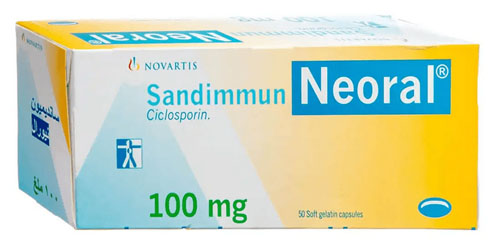
If you have severe psoriasis or atopic dermatitis (eczema)
These serious skin conditions are thought to be caused by your immune system overreacting.
Neoral may help by suppressing the immune system.
If you have severe rheumatoid arthritis or nephrotic syndrome
Rheumatoid arthritis and some forms of nephrotic syndrome are thought to be caused by inappropriate immune responses in your body. Neoral may help by suppressing your immune system.
Things to consider before you start to take Neoral
Some people must not take Neoral. Talk to your doctor if:
- you think you may be allergic to ciclosporin, or to any of the other ingredients of Neoral (these are listed at the end of the leaflet)
- you are taking a medicine called tacrolimus
- you are taking a medicine called rosuvastatin
- you are breastfeeding
People with psoriasis or atopic dermatitis MUST NOT be treated with Neoral if they have kidney problems, uncontrolled high blood pressure or infections, or if they have any cancer except skin cancer.
People with rheumatoid arthritis MUST NOT be treated with Neoral if they are under 18 years old, or if they have kidney problems, uncontrolled high blood pressure, infections, or any type of cancer.
People with nephrotic syndrome MUST NOT be treated with Neoral if they have uncontrolled high blood pressure or infections, or if they have any type of cancer.
You should also ask yourself these questions before taking Neoral. If the answer to any of these questions is YES, discuss your treatment with your doctor or pharmacist because Neoral might not be the right medicine for you.
- Have you been told that you have high levels of potassium in your blood? Are you taking potassium supplements, or is your diet particularly high in potassium? (Fruit and vegetables are rich sources of potassium.)
- Do you have gout or other conditions caused by high levels of uric acid in your blood?
- Are you worried about any unusual spots, moles or warts on your skin?
- Are you out in the sun a lot, or do you use a tanning bed?
- Do you have any skin infections, including herpes (cold sores)?
- Are you pregnant?
Are you taking other medicines?
Ciclosporin interacts with a large number of other medicines, and this can affect your treatment. Tell your doctor or pharmacist if you are taking any of the following:
- Medicines to treat heart problems or high blood pressure such as bosentan, diltiazem, nicardipine and verapamil.
- Medicines containing potassium (your doctor will know which these are).
- Medicines called non-steroidal anti-inflammatory drugs (NSAIDs) used to treat pain and inflammation (some of these can be bought over the counter).
- Medicines to treat infections, including antibiotics (especially erythromycin and clarithromycin) and antifungal medicines (especially terbinafine and voriconazole).
- Oral contraceptives.
- Medicines for epilepsy.
- Cholesterol-lowering medicines (including statins).
- Sleeping tablets.
- Potassium supplements.
- Diuretics or "water tablets" that affect the amount of urine you produce and might also affect the level of potassium in your blood.
- Danazol (used to treat menstrual disorders, endometriosis or breast problems).
St John's Wort: The herbal remedy St John's Wort (Hypericum perforatum) should not be taken at the same time as this medicine. If you are already taking St John's Wort, speak to your doctor before stopping the preparation.
- Octreotide (known as Sandostatin®).
- Medicines to treat tuberculosis.
- Medicines to treat gout.
- Metoclopramide (used to stop nausea and vomiting).
- Melphalan (used to treat lymphomas or tumours).
- Imatinib (used to treat leukaemia or tumours).
- Orlistat (used to help with weight loss).
- Ticlopidine (used after a stroke).
- Corticosteroids (used to treat conditions such as asthma, allergic conditions, inflammatory conditions including inflammatory bowel disease, adrenocortical insufficiency and rheumatic disease).
- Ursodeoxycholic acid (used to treat gallstones).
- Protease inhibitors (used to treat Human Immunodeficiency Virus (HIV)).
- Tacrolimus, sirolimus and everolimus (other immunosuppressants).
- Methotrexate (used to treat tumours, severe psoriasis and rheumatoid arthritis).
- Etoposide (used to treat cancer).
- Repaglinide (used to treat diabetes).
Always tell your doctor or pharmacist about all the medicines you are taking. Will there be any problems with driving or using machinery?
No problems have been reported. However, Neoral does contain a small amount of alcohol. See the section below for information on some of the ingredients of Neoral.
Other special warnings
The dose of this medicine needs to be adjusted carefully by your doctor. You will, therefore, have regular blood tests and visits to the hospital in Australia. This will give you the chance to talk to your doctor about your treatment and mention any problems you are having.
Ciclosporin can affect how your liver and kidneys work. It can also affect your blood pressure and the composition of your blood. Your doctor in Australia will want to carry out tests from time to time while you are being treated with Neoral.
Because ciclosporin dampens down the immune system, you are more likely to get infections, and they can become very serious. If you experience vision changes, loss of coordination, clumsiness, memory loss, difficulty speaking or understanding what others say, and muscle weakness, these may be signs and symptoms of a brain infection called progressive multifocal leukoencephalopathy. Contact your doctor as soon as you feel unwell.
There have been very rare reports of people developing a condition called benign intracranial hypertension while being treated with ciclosporin. Tell your doctor as soon as possible if you start to feel nauseous, develop tinnitus (ringing in your ears), or get pain in your head, neck or back, or problems with your sight, balance or memory.
Before giving you Neoral to treat psoriasis, the doctor will examine you to make sure that you do not have any skin cancers or pre-cancers.
You must not have light treatment with psoralen and ultraviolet A (PUVA) or other ultraviolet (UV) treatment for psoriasis while you are taking Neoral.
Do not spend too much time in the sun without protecting your skin.
You must not eat grapefruit or drink grapefruit juice in the hour before you take Neoral.
If you have recently had a vaccination or are planning to have any vaccinations, make sure the doctor or nurse knows you are taking Neoral.
You must visit the dentist regularly in Australia while you are taking Neoral to make sure that your gums remain healthy.
Important information about some of the ingredients of Neoral
Neoral contains:
Polyoxyl 40 hydrogenated castor oil, which may cause stomach upset and diarrhoea.
12% ethanol (alcohol). A 500 mg dose of Neoral contains 474 mg of ethanol, equivalent to nearly three teaspoons of beer or one teaspoon of wine. This may be harmful if you have alcoholism and should be taken into account if you are pregnant or breastfeeding, or if you have liver disease or epilepsy, or if this medicine is being given to a child.
Taking Neoral
Your doctor will work out the correct dose of Neoral for you depending on your body weight and your condition. Your doctor will also tell you how often to take your medicine. Always follow their instructions carefully. The dose will be on the pharmacist's label. Check the label carefully. If you are not sure, ask your doctor or pharmacist. Do not change the dose, even if you feel well. Keep taking your medicine for as long as you have been told, unless you have any problems. In that case, check with your doctor.
You are usually advised to take Neoral twice a day. Instructions on how to take Neoral are given at the end of this leaflet.
If you have had an organ or bone marrow transplant, the total dose is usually within the range of 2 to 15 mg/kg body weight/day. Generally, higher doses are used just after your transplant operation and lower doses are used once your transplanted organ or bone marrow has stabilised. Your doctor will adjust your dose to one that is right for you. To do this, they may need to do some blood tests.
- For the treatment of severe psoriasis and eczema, the total dose is usually within the range of 2.5 to 5 mg/kg body weight/day.
- For the treatment of severe rheumatoid arthritis, the total dose is usually within the range of 2.5 to 4 mg/kg body weight/day.
- For the treatment of nephrotic syndrome, the total dose is usually within the range of 2.5 to 5 mg/kg body weight/day in adults and 2.5 to 6 mg/kg body weight/day in children.
Has your treatment been switched from another ciclosporin brand to Neoral? The absorption of ciclosporin into the bloodstream varies from one preparation to another. Consistent blood levels of ciclosporin are thought to be particularly important in preventing rejection after transplantation, especially in the longer term.
Because of the difference in absorption of ciclosporin, your doctor will probably want to monitor you more closely for a short period if you change to Neoral, to make sure you get the right dose for you. If your doctor transfers you to Neoral, you should not go back to another ciclosporin brand unless your doctor tells you to.
What if you forget to take a dose?
If you forget to take a dose, take one as soon as you remember, unless it is almost time for your next dose. Then continue as before.
What if you take too much?
If you accidentally take too much of your medicine, tell your doctor immediately, or go to your nearest emergency department.
Possible side effects
Most people prescribed Neoral benefit from it. Like all medicines, though, it can sometimes cause side effects in some people.
If you develop a sore throat, any infections, or begin to feel generally unwell, see your doctor immediately.
The side effects listed below have been reported: More than 10% of people have experienced:
Kidney problems, high blood pressure, headache, tremor, increased levels of lipids (for example cholesterol) in the blood, chest infections, urinary tract infections and infection with cytomegalovirus (CMV).
Up to 1 in 10 people have experienced:
Numbness or tingling, loss of appetite, feeling or being sick, stomach pain, diarrhoea, swollen gums, liver problems, high levels of uric acid or potassium in the blood, low levels of magnesium in the blood, muscle pain or cramp, increased hair growth on the body, tiredness, herpes infection, Candida infection, blood poisoning, skin disorders, cancers and overproduction of white blood cells.
Up to 1 in 100 people have experienced:
Seizures, confusion, disorientation, decreased responsiveness, agitation, sleeplessness, visual disturbances, blindness, coma, partial paralysis, loss of coordination, changes in the blood (for example anaemia), allergic rash, water retention which may cause swelling and weight gain.
Up to 1 in 1,000 people have experienced:
Problems with the nerves that control muscles, inflammation of the pancreas, high levels of glucose in the blood, muscle weakness, muscle wasting, destruction of red blood cells which may be associated with kidney problems, changes in the menstrual cycle in women and slight enlargement of the breasts in men.
Up to 1 in 10,000 people have experienced:
Swelling at the back of the eye which may be associated with an increase in pressure inside the head, (benign intracranial hypertension) and visual disturbances.
Like other medicines that dampen down the immune system, ciclosporin may cause tumours or other malignancies, particularly of the skin. It may also make you more likely to get infections, which may be serious. If you experience vision changes, loss of coordination, clumsiness, memory loss, difficulty speaking or understanding what others say, and muscle weakness, these may be signs and symptoms of a brain infection called progressive multifocal leukoencephalopathy.
Tell your doctor or pharmacist if you get any of these effects, or any other side effects not mentioned in this leaflet.
How to store Neoral
Keep out of the reach and sight of children.
Store Neoral below 30°C (86°F) and preferably above 15°C (59°F). At lower temperatures the solution becomes thicker and can become jelly-like or develop a sediment. This does not affect the quality of the solution, and the measuring device will still work properly.
Do not take Neoral after the expiry date printed on the outside of the pack.
If your doctor tells you to stop taking Neoral, please take any unused liquid back to your pharmacist for disposal. Do not throw it away with your normal household water or waste.
This will help protect the environment.
Further information
The solution contains 100 mg/ml of the active ingredient, ciclosporin. It also contains the following inactive ingredients: DL-ot-tocopherol, absolute ethanol, propylene glycol, corn oil mono di-triglycerides and polyoxyl 40 hydrogenated castor oil.
Neoral vs Sandimmune (cyclosporine): key differences
Both products contain cyclosporine, but they are different oral formulations with different absorption characteristics.
Because of this, they should not be considered interchangeable without medical supervision and drug-level monitoring.
| Category |
Neoral |
Sandimmune |
| Active ingredient |
Cyclosporine |
Cyclosporine |
| Formulation type |
Modified (microemulsion) |
Non-modified (older formulation) |
| Absorption |
More predictable/consistent |
More variable (can be more affected by food and individual factors) |
| Exposure at the same dose |
Often higher (AUC/Cmax) |
Often lower/less consistent |
| Interchangeability |
Not bioequivalent to Sandimmune |
Not bioequivalent to Neoral |
| If switching |
Requires monitoring (e.g., trough levels, kidney function, blood pressure); dose adjustment may be needed |
Same |
| How it's usually written |
Often labelled "cyclosporine modified" |
Often labelled "cyclosporine (non-modified)" |
Which is "better"?
For most Australian patients needing oral cyclosporine, Neoral (modified) is preferred because absorption is more predictable-but the "right" choice depends on your indication and what your clinician is targeting with drug levels.
Neoral is available in bottles containing 20 or 50 ml with a device to measure an accurate dose. Some of these pack sizes might not be marketed.
How to take Neoral
Your pack of Neoral contains a bottle of medicine, a cap, two oral syringes and a tube with an attached white stopper. It is important that you use the correct dosing syringe for your medicine.
The smaller 1 mL syringe, marked from 0.1 to 1 mL with the white plunger, is for measuring doses of less than 1 mL. You should use this one if the total amount you have to take is less than 1 mL (each graduation of 0.05 mL is 5 mg of ciclosporin). The slightly larger 4 mL syringe, marked 0.5 to 4 mL with the colourless plunger, is for measuring doses of more than 1 mL (each graduation of 0.1 mL is 10 mg of ciclosporin). You should use this one if the total amount you have to take is more than 1 mL.
When you open your medicine for the first time, follow the instructions below:
- Raise the flap in the centre of the metal sealing ring.
- Tear off the sealing ring completely.
- Remove the black rubber stopper from the bottle and dispose of it carefully.
- Take the tube with attached white stopper from the case and insert it into the bottle, pushing the stopper firmly into the neck.
- Pour about 50 ml (Vi cup) of liquid (see below) into a clean glass or cup. Do not use a plastic cup. Choose the syringe depending on the prescribed volume. For a volume less than 1 mL, use the 1 mL syringe. For a volume greater than 1 mL, use the 4 mL syringe. Insert the nozzle of the syringe into the stopper.
- Do not withdraw the dose from an inverted or tilted bottle. Make sure the bottle is upright. Pull back the plunger until the medicine rises in the syringe to the dose level prescribed by your doctor.
- If any large bubbles appear, slowly press the plunger all the way down and then draw the medicine up again to the dose level prescribed. A few tiny bubbles are not important and will not affect the dose in any way. Hold the syringe above the liquid in the glass and press the plunger. Avoid contact between the syringe and the liquid in the glass. Stir well and drink at once. Do not leave the mixture to stand. Rinse the glass with a little more liquid and drink it to make sure you get the whole dose.
- Do not wash the syringe. After use, wipe the outside with a clean tissue and return it to its cover. Dispose of the tissue carefully.
The white stopper and tube should remain in the bottle. Close the bottle with the cap provided.
Neoral can be taken with water. To improve the taste, the solution can be diluted with orange juice or squash, or apple juice. Grapefruit juice should never be used. In addition, do not eat grapefruit or drink grapefruit juice for 1 hour before taking your dose as it may interfere with your medicine.