I'm in Geelong. Can I enter my postcode before paying to see whether these tablets can be delivered to my address?
Yes. Enter your Geelong postcode at checkout to check whether delivery is available for your address before you complete the order.


 AntiInfectiveMeds
Since 2010
AntiInfectiveMeds
Since 2010

| Quantity | Price per tablet | You save | Total price | |
|---|---|---|---|---|
| 30 | A$2.68 | - | A$80.51 | |
| 60 | A$1.97 | A$43.10 | A$117.92 | |
| 90 | A$1.75 | A$84.07 | A$157.47 | |
| 120 | A$1.63 | A$126.60 | A$195.45 | |
| 180 | A$1.53 | A$206.97 | A$276.10 | |
| 270 | A$1.45 | A$333.00 | A$391.61 | |
| 360 | A$1.41 | A$457.75 | A$508.39 |
| Quantity | Price per tablet | You save | Total price | |
|---|---|---|---|---|
| 30 | A$3.43 | - | A$102.99 | |
| 60 | A$2.61 | A$49.64 | A$156.33 | |
| 90 | A$2.31 | A$101.28 | A$207.68 | |
| 120 | A$2.18 | A$150.92 | A$261.02 | |
| 180 | A$2.05 | A$248.36 | A$369.56 | |
| 270 | A$1.96 | A$397.72 | A$529.16 |
| Quantity | Price per tablet | You save | Total price | |
|---|---|---|---|---|
| 30 | A$4.38 | - | A$131.44 | |
| 60 | A$3.95 | A$26.03 | A$236.84 | |
| 90 | A$3.82 | A$50.36 | A$343.95 | |
| 120 | A$3.74 | A$77.38 | A$448.36 | |
| 180 | A$3.66 | A$130.01 | A$658.61 | |
| 270 | A$3.62 | A$206.12 | A$976.81 |
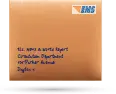
Your order is carefully packed and ships within 24 hours. Here is what a typical package looks like.
Sized like a regular personal letter (approximately 24x11x0.7 cm), with no indication of what is inside.


| Delivery Method | Estimated delivery |
|---|---|
| Express Free for orders over A$426.74 | Estimated delivery to Australia: 4-7 days |
| Standard Free for orders over A$284.50 | Estimated delivery to Australia: 14-21 days |












| Country | Brand Names |
|---|---|
| Australia | Curam |
Amoxicillin with clavulanate potassium is a fixed combination of amoxicillin trihydrate (an aminopenicillin antibiotic) and the potassium salt of clavulanic acid (a beta-lactamase inhibitor). Clavulanic acid helps broaden amoxicillin's activity against many strains of beta-lactamase-producing bacteria. In Australian clinical practice, this combination is commonly prescribed when broader antibacterial cover is needed against susceptible organisms.
Amoxicillin with clavulanate potassium is taken by mouth to treat lower respiratory tract infections, otitis media, sinusitis, skin and skin structure infections, and urinary tract infections caused by susceptible organisms. It has also been used orally to treat chancroid and gonorrhoea caused by susceptible organisms.
Amoxicillin with clavulanate potassium is used mainly for infections caused by susceptible beta-lactamase-producing strains of Moraxella catarrhalis (formerly Branhamella catarrhalis), Escherichia coli, Haemophilus influenzae, Klebsiella, and Staphylococcus aureus.
Although amoxicillin with clavulanate potassium may also be effective for infections caused by non-beta-lactamase-producing organisms that are susceptible to amoxicillin alone, most clinicians prefer an aminopenicillin on its own for these infections. Amoxicillin with clavulanate potassium is generally reserved for infections caused by, or suspected to be caused by, beta-lactamase-producing organisms when an aminopenicillin alone would not be effective.
Before starting treatment with amoxicillin with clavulanate potassium, appropriate specimens should be collected to identify the causative organism and carry out in vitro susceptibility tests.
Treatment with amoxicillin with clavulanate potassium may be started before susceptibility test results are available if the infection is thought to be caused by beta-lactamase-producing bacteria susceptible to the drug, but it should be stopped if the organism is found to be resistant. (See Spectrum: In Vitro Susceptibility Testing.) If the infection is found to be caused by non-beta-lactamase-producing organisms susceptible to aminopenicillins, some clinicians suggest that treatment should generally be changed to an aminopenicillin alone, unless this is impractical.
Amoxicillin with clavulanate potassium has been effective when taken by mouth in adults and children for the treatment of abscesses, cellulitis, and impetigo caused by susceptible penicillinase-producing and nonpenicillinase-producing Staphylococcus aureus and S. epidermidis, Streptococcus pyogenes (group A beta-haemolytic streptococci), or Corynebacterium. Results from several controlled studies show that amoxicillin with clavulanate potassium is as effective as cefaclor for these infections.
However, natural penicillins are generally the treatment of choice for infections caused by nonpenicillinase-producing staphylococci or group A beta-haemolytic streptococci, and penicillinase-resistant penicillins are generally preferred for infections caused by susceptible penicillinase-producing staphylococci. Amoxicillin with clavulanate potassium should not be used to treat infections caused by methicillin-resistant staphylococci, even if in vitro susceptibility tests suggest that the organism is susceptible to the drug.
Amoxicillin with clavulanate potassium has generally been effective in adults and children for otitis media and upper and lower respiratory tract infections such as bronchopneumonia, sinusitis, and acute flare-ups of chronic bronchitis caused by susceptible H. influenzae. Some clinicians suggest that amoxicillin with clavulanate potassium is a treatment of choice for empiric anti-infective treatment of otitis media and sinusitis in communities with a high rate of ampicillin-resistant H. influenzae or M. catarrhalis, and for infections that do not respond to other regimens. (See Uses: Otitis Media.)
Oral amoxicillin with clavulanate potassium (500 mg of amoxicillin and 125 or 250 mg of clavulanic acid every 8 hours for 7 days) has been effective in the treatment of chancroid (genital ulcers caused by H. ducreyi). The mean time to complete healing of ulcers with amoxicillin with clavulanate potassium has been 6.5-11.4 days, and buboes have generally resolved within 4 weeks. However, amoxicillin with clavulanate potassium is not included in current Australian sexually transmitted infection treatment guidance for chancroid. In Australia, recommended treatment options generally include a single oral dose of azithromycin, a single intramuscular (IM) dose of ceftriaxone, a 3-day course of oral ciprofloxacin, or a 7-day course of oral erythromycin.
Infections caused by beta-lactamase-producing M. catarrhalis have been reported more often in recent years. This organism is now recognised as a common cause of otitis media and maxillary sinusitis in children, and of bronchitis and pneumonia in adults, especially those with chronic lung disease. Rarely, septicaemia, endocarditis, urethritis, meningitis, neonatal ophthalmia, and conjunctivitis caused by M. catarrhalis have been reported.
Amoxicillin with clavulanate potassium has generally been effective for upper and lower respiratory tract infections caused by M. catarrhalis, and many clinicians consider it a treatment of choice for infections caused by this organism. It has also generally been effective for acute otitis media and acute maxillary sinusitis caused by M. catarrhalis. In several controlled studies, amoxicillin with clavulanate potassium was more effective than cefaclor for the empiric treatment of acute otitis media in children aged 2 months to 12 years.
Although gastrointestinal (GI) side effects occurred more often with amoxicillin with clavulanate potassium than with cefaclor, amoxicillin with clavulanate potassium appears to be more active than cefaclor against beta-lactamase-producing M. catarrhalis. Some clinicians suggest that amoxicillin with clavulanate potassium is a treatment of choice for empiric treatment of otitis media and sinusitis in communities with a high rate of beta-lactamase-producing M. catarrhalis.
Amoxicillin with clavulanate potassium has been used orally with some success for the treatment of uncomplicated gonorrhoea caused by penicillinase-producing strains of N. gonorrhoeae (PPNG) or nonpenicillinase-producing strains of the organism. Regimens consisting of a single oral dose of amoxicillin (3 g) and clavulanic acid (125-500 mg), with or without oral probenecid (1 g), have been effective in some cases for uncomplicated gonorrhoea caused by PPNG or nonpenicillinase-producing N. gonorrhoeae.
However, treatment failures have been reported when these single-dose regimens were used for infections caused by PPNG, although in some cases in vitro tests indicated that the organism was susceptible to the drug. Penicillins, including amoxicillin with clavulanate potassium, are not included in current CDC recommendations for the treatment of gonorrhoea.
Amoxicillin with clavulanate potassium has generally been effective when taken by mouth in adults and children for uncomplicated or complicated urinary tract infections (UTIs) caused by susceptible organisms, including E. coli, Klebsiella, Enterobacter, or P. mirabilis. Although most strains of Enterobacter are resistant to amoxicillin with clavulanate potassium in vitro, the drug has been effective in some cases when used to treat UTIs caused by this organism.
Because amoxicillin with clavulanate potassium is active in vitro against many urinary pathogens resistant to aminopenicillins, some clinicians suggest that the combination may be preferred over ampicillin or amoxicillin alone for the initial treatment of UTIs. However, further studies are needed to compare the efficacy of amoxicillin with clavulanate potassium with other anti-infectives (for example, co-trimoxazole) in the treatment of UTIs.
Amoxicillin with clavulanate potassium has been used to treat infections caused by Eikenella corrodens or Pasteurella multocida.
Amoxicillin with clavulanate potassium has been used orally with some success in a limited number of patients for anaerobic and mixed aerobic-anaerobic bacterial infections, including intra-abdominal and gynaecologic infections such as endometritis, salpingitis, pelvic cellulitis, and acute pelvic inflammatory disease.
Although oral amoxicillin with clavulanate potassium has been effective in the treatment of these infections, including infections caused by Bacteroides fragilis, some clinicians suggest that more study is needed to assess how well the drug works in anaerobic and mixed aerobic-anaerobic bacterial infections and to determine whether the serum and tissue concentrations of amoxicillin and clavulanic acid achieved after oral administration are adequate for treating these infections.
Amoxicillin with clavulanate potassium is used to treat acute otitis media (AOM) caused by S. pneumoniae, H. influenzae (including beta-lactamase-producing strains), or M. catarrhalis (including beta-lactamase-producing strains). Amoxicillin is usually considered the first choice for initial treatment of AOM, unless the infection is suspected to be caused by beta-lactamase-producing bacteria resistant to the drug, in which case amoxicillin with clavulanate potassium is recommended.
The American Academy of Pediatrics (AAP), CDC, and other clinicians state that, despite the increasing prevalence of multidrug-resistant S. pneumoniae and the presence of beta-lactamase-producing H. influenzae or M. catarrhalis in many communities, amoxicillin remains the anti-infective of first choice for uncomplicated AOM because it is highly effective, has a narrow spectrum of activity, distributes well into middle ear fluid, and is generally well tolerated and inexpensive.
Amoxicillin, especially when given in doses of 80-90 mg/kg/day, is usually effective for AOM caused by S. pneumoniae, including infections involving strains with intermediate resistance to penicillins, and is also usually effective for AOM caused by most strains of H. influenzae.
High-dose amoxicillin with clavulanate potassium, oral cefuroxime axetil, or IM ceftriaxone are recommended for persistent or recurrent AOM in patients who do not respond to a previous regimen, including amoxicillin given in usual or high doses.
For AOM in patients who have received anti-infective treatment within the previous few months, high-dose amoxicillin, high-dose amoxicillin with clavulanate potassium, or oral cefuroxime axetil is recommended. For more information on treating AOM and on prophylaxis for recurrent AOM, treatment of persistent or recurrent AOM, and treatment of otitis media with effusion (OME), see Uses: Otitis Media in the Aminopenicillins General Statement 8:12.16.08.
Although it is not considered a treatment of choice for pharyngitis and tonsillitis caused by S. pyogenes (group A beta-haemolytic streptococci), amoxicillin with clavulanate potassium is recommended as one of several possible alternatives for symptomatic patients who have multiple, recurrent episodes of pharyngitis known to be caused by S. pyogenes. Natural penicillins (that is, 10 days of oral penicillin V or a single IM dose of penicillin G benzathine) are the treatment of choice for streptococcal pharyngitis and tonsillitis, although oral amoxicillin is often used instead of penicillin V in young children because it tastes better.
If signs and symptoms of pharyngitis recur shortly after the initial recommended regimen has been completed, that is, within a few weeks, and S. pyogenes is detected, retreatment with the original regimen or another treatment of choice is indicated. If there are concerns about completing a 10-day oral regimen, IM penicillin G benzathine should be used for retreatment.
Some clinicians suggest using an alternative medicine such as amoxicillin with clavulanate, clindamycin, or a macrolide for retreatment. However, if there are multiple, recurrent episodes of symptomatic pharyngitis over months to years, it may be difficult to tell whether these are true episodes of S. pyogenes infection or whether the patient is a long-term streptococcal throat carrier who is having repeated episodes of non-streptococcal pharyngitis, such as viral pharyngitis, where treatment is usually not needed.
Continuous anti-infective prophylaxis (secondary prophylaxis) to prevent recurrent streptococcal pharyngitis is not recommended in these circumstances unless the patient has a history of rheumatic fever. Instead, some clinicians recommend using an alternative regimen.
Although there are no controlled clinical studies assessing efficacy, the Infectious Diseases Society of America (IDSA) suggests that symptomatic individuals with multiple, recurrent episodes of documented S. pyogenes pharyngitis receive a regimen of oral amoxicillin clavulanate, oral clindamycin, or IM penicillin G benzathine, with or without oral rifampin. For more information on treatment of S. pyogenes pharyngitis, see Pharyngitis and Tonsillitis under Gram-positive Aerobic Bacterial Infections: Streptococcus pyogenes Infections in Uses in the Natural Penicillins General Statement 8:12.16.04.
Amoxicillin with clavulanate potassium is taken by mouth. Chewable tablets should be chewed thoroughly before swallowing. Amoxicillin with clavulanate potassium has also been given intravenously (IV), but a parenteral formulation is not currently marketed in Australia. Because GI absorption of amoxicillin with clavulanate potassium is not affected by food after oral administration of conventional preparations, these preparations may be taken without regard to meals. However, taking oral amoxicillin with clavulanate potassium with food may help minimise GI side effects.
Extended-release tablets should be taken at the beginning of a meal to improve GI absorption of amoxicillin and clavulanate and to minimise GI side effects. Amoxicillin absorption from extended-release tablets is reduced when taken fasting, and clavulanate absorption is reduced when these tablets are taken with a high-fat meal.
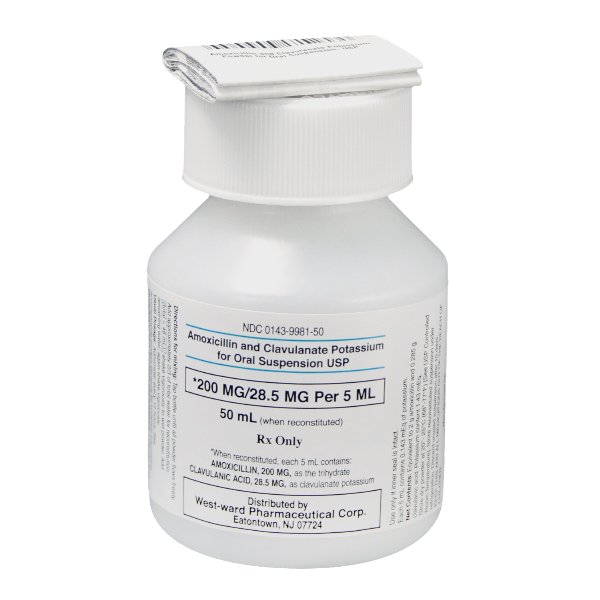
Amoxicillin with clavulanate potassium powder for oral suspension should be reconstituted at the time of dispensing by adding the amount of water specified on the bottle to provide a suspension containing 125 mg of amoxicillin and 31.25 mg of clavulanic acid per 5 mL, 200 mg of amoxicillin and 28.5 mg of clavulanic acid per 5 mL, 250 mg of amoxicillin and 62.5 mg of clavulanic acid per 5 mL, or 600 mg of amoxicillin and 42.9 mg of clavulanic acid per 5 mL.
After tapping the bottle to loosen the powder thoroughly, the water should be added in 2 portions and the suspension shaken well after each addition. The suspension should be shaken well just before each dose.
Dosage of amoxicillin with clavulanate potassium is generally expressed in terms of the amoxicillin content of the fixed combination. Although commercially available amoxicillin with clavulanate potassium contains amoxicillin as the trihydrate and/or sodium salt and clavulanic acid as the potassium salt, the potency of amoxicillin is calculated on an anhydrous basis and the potency of clavulanate potassium is expressed in terms of clavulanic acid.
Amoxicillin with clavulanate potassium is commercially available for oral use as a powder for oral suspension containing a 4:1, 7:1, or 14:1 ratio of amoxicillin to clavulanic acid; as chewable tablets containing a 4:1 or 7:1 ratio of the drugs; as film-coated tablets containing a 2:1 or 4:1 ratio of the drugs; as scored tablets containing a 7:1 ratio of the drugs; and as extended-release tablets containing a 16:1 ratio of the drugs.
Commercially available amoxicillin with clavulanate potassium powders for oral suspension should not be considered interchangeable because they contain different amounts of clavulanic acid. The powder for oral suspension containing 600 mg of amoxicillin and 42.9 mg of clavulanic acid per 5 mL (Augmentin ES-600®) is indicated only for the treatment of persistent or recurrent acute otitis media (AOM) in certain paediatric patients aged 3 months to 12 years; safety and efficacy of this preparation in younger children or in adolescents or adults have not been established.
Because commercially available film-coated tablets containing 250 mg of amoxicillin also contain 125 mg of clavulanic acid, while commercially available chewable tablets containing 250 mg of amoxicillin contain 62.5 mg of clavulanic acid, these preparations should not be considered interchangeable. In addition, because the 250 mg and 500 mg film-coated tablets both contain the same amount of clavulanic acid, two 250 mg film-coated tablets are not equivalent to one 500 mg film-coated tablet. Because extended-release tablets of amoxicillin with clavulanate potassium contain different ratios of the drugs, they are not equivalent to conventional or chewable tablets.
Children weighing less than 40 kg should not receive the 250 mg film-coated tablets because this formulation contains a higher dose of clavulanic acid. (See Dosage: Pediatric Dosage, under Dosage and Administration.)
Safety and efficacy of the extended-release tablets have not been established in paediatric patients younger than 16 years of age.
The usual adult oral dosage of amoxicillin with clavulanate potassium is one 250 mg film-coated tablet (containing 250 mg of amoxicillin and 125 mg of clavulanic acid) every 8 hours or one 500 mg film-coated tablet (containing 500 mg of amoxicillin and 125 mg of clavulanic acid) every 12 hours. For more severe infections and respiratory tract infections, the usual adult oral dosage is one 500 mg film-coated tablet (containing 500 mg of amoxicillin and 125 mg of clavulanic acid) every 8 hours or one 875 mg scored tablet (containing 875 mg of amoxicillin and 125 mg of clavulanic acid) every 12 hours.
Alternatively, adults who have difficulty swallowing tablets may be given the oral suspension containing 125 mg or 250 mg of amoxicillin/5 mL instead of the 500 mg film-coated tablet, or the oral suspension containing 200 mg or 400 mg of amoxicillin/5 mL instead of the 875 mg scored tablet. The usual oral dosage of extended-release amoxicillin with clavulanate potassium tablets for the treatment of acute bacterial sinusitis in patients aged 16 years and older is 2 tablets (containing 1 g of amoxicillin and 62.5 mg of clavulanic acid in each tablet) every 12 hours for 10 days.
The usual oral dosage of the extended-release tablets for the treatment of community-acquired pneumonia (CAP) in patients aged 16 years and older is 2 tablets (containing 1 g of amoxicillin and 62.5 mg of clavulanic acid in each tablet) every 12 hours for 7-10 days. Dose adjustment for extended-release tablets based solely on age is not necessary in geriatric patients.
Children weighing 40 kg or more may receive the usual adult oral dosage of amoxicillin with clavulanate potassium. The usual dosage in neonates and infants younger than 12 weeks of age is 30 mg/kg/day of amoxicillin given in divided doses every 12 hours.
Because experience with the oral suspension containing 200 mg of amoxicillin/5 mL is limited in this age group, the manufacturer recommends using the oral suspension containing 125 mg of amoxicillin/5 mL in neonates and infants younger than 12 weeks of age.
For the treatment of sinusitis, lower respiratory tract infections, and more severe infections in paediatric patients aged 12 weeks and older, the usual dosage of amoxicillin with clavulanate potassium is 45 mg/kg/day of amoxicillin in divided doses every 12 hours, given as the oral suspension containing 200 mg or 400 mg of amoxicillin/5 mL or as chewable tablets containing 200 mg or 400 mg of amoxicillin.
Alternatively, these infections in this age group can be treated with 40 mg/kg/day of amoxicillin in divided doses every 8 hours, given as the oral suspension containing 125 mg or 250 mg of amoxicillin/5 mL or as chewable tablets containing 125 mg or 250 mg of amoxicillin.
For the treatment of less severe infections in paediatric patients aged 12 weeks or older, the usual dosage of amoxicillin with clavulanate potassium is 25 mg/kg/day of amoxicillin in divided doses every 12 hours, given as the oral suspension containing 200 mg or 400 mg of amoxicillin/5 mL or as chewable tablets containing 200 mg or 400 mg of amoxicillin.
Alternatively, less severe infections in this age group can be treated with 20 mg/kg/day of amoxicillin in divided doses every 8 hours, given as the oral suspension containing 125 mg or 250 mg of amoxicillin/5 mL or as chewable tablets containing 125 mg or 250 mg of amoxicillin.
For the treatment of acute otitis media (AOM) in paediatric patients, amoxicillin and clavulanate potassium is usually given at a dosage of 40-45 mg/kg/day of amoxicillin in 2 or 3 divided doses for 10 days.
Amoxicillin and clavulanate potassium has also been given at a dosage of 80-90 mg/kg/day of amoxicillin in 2 or 3 divided doses for the treatment of AOM in paediatric patients.
The American Academy of Pediatrics (AAP), the US Centers for Disease Control and Prevention (CDC), and some clinicians suggest considering the higher dosage for AOM, especially in patients with infections known or suspected to be caused by Streptococcus pneumoniae with reduced susceptibility to penicillins; patients with primary treatment failure or persistent or recurrent AOM after treatment with amoxicillin or high-dose amoxicillin; and patients who have received anti-infective therapy within the previous few months.
If amoxicillin and clavulanate potassium is given at the higher dosage for AOM in paediatric patients, commercially available formulations containing a 7:1 or 14:1 ratio of amoxicillin to clavulanic acid should be used, since these formulations provide a lower daily dosage of clavulanate potassium and reduce the risk of GI side effects linked to the clavulanate potassium component. When the oral suspension containing 600 mg of amoxicillin and 42.9 mg of clavulanic acid per 5 mL is used for persistent or recurrent AOM in paediatric patients weighing less than 40 kg, the usual dosage is 90 mg/kg/day of amoxicillin in divided doses every 12 hours for 10 days.
If amoxicillin and clavulanate potassium is used to treat symptomatic patients who have multiple, recurrent episodes of pharyngitis known to be caused by Streptococcus pyogenes (group A beta-haemolytic streptococci) (see Uses: Pharyngitis and Tonsillitis), the IDSA recommends that children receive 40 mg/kg/day of amoxicillin (maximum 750 mg daily) in 3 equally divided doses for 10 days.
Adults should receive amoxicillin and clavulanate potassium at a dosage of 500 mg of amoxicillin twice daily for 10 days; the IDSA states that this dosage has not been specifically studied in adults and was extrapolated from the paediatric dosage.
In patients with renal impairment, the dose and/or frequency of amoxicillin and clavulanate potassium should be adjusted according to the degree of renal impairment.
Some clinicians suggest that changing the usual dosage is unnecessary in adults with creatinine clearance greater than 30 mL/minute. These clinicians recommend that adults with creatinine clearance of 15-30 mL/minute receive the usual dose of conventional preparations of the medicine every 12-18 hours, adults with creatinine clearance of 5-15 mL/minute receive the usual dose every 20-36 hours, and adults with creatinine clearance less than 5 mL/minute receive the usual dose every 48 hours.
However, other clinicians suggest that amoxicillin and clavulanate potassium should be avoided in patients with creatinine clearance less than 30 mL/minute until more data are available on use of the medicine in these patients. Some clinicians suggest that adults undergoing haemodialysis receive a 500-mg tablet containing 500 mg of amoxicillin and 125 mg of clavulanic acid halfway through each dialysis period and an additional 500-mg tablet after each dialysis period.
The pharmacokinetics of extended-release tablets of amoxicillin and clavulanate potassium have not been studied in patients with renal impairment, and the manufacturer states that this preparation is contraindicated in patients with severe impairment (creatinine clearance less than 30 mL/minute and those undergoing haemodialysis).
The extended-release tablets should be dosed cautiously in patients with hepatic impairment, and liver function should be monitored at frequent intervals.
Side effects reported with amoxicillin and clavulanate potassium are generally dose related and are similar to those reported with amoxicillin alone. For information on side effects reported with amoxicillin and other aminopenicillins, see Cautions in the Aminopenicillins General Statement 8:12.16.08. With the exception of GI side effects, which have been reported more often with amoxicillin and clavulanate potassium than with amoxicillin alone, the frequency and severity of side effects reported with the fixed-combination preparations are generally similar to those reported with amoxicillin alone.
The manufacturers state that side effects reported with oral amoxicillin and clavulanate potassium are generally mild and temporary and have required stopping treatment in less than 3% of patients receiving the medicine. GI effects are the most frequent side effects with oral amoxicillin and clavulanate potassium.
Diarrhoea or loose stools has been reported in about 9% of patients receiving the medicine, and nausea and vomiting have been reported in 1-5% of patients. Abdominal discomfort, anorexia, flatulence, dyspepsia, gastritis, stomatitis, glossitis, black or hairy tongue, and enterocolitis have also been reported.
The frequency of nausea and vomiting appears to be related to the dose of clavulanic acid, since these effects have been reported in up to 40% of patients when a 250-mg dose of clavulanic acid rather than a 125-mg dose was used together with amoxicillin.
Taking oral amoxicillin and clavulanate potassium with food may reduce the frequency and severity of GI side effects, so patients should be advised to take the medicine with a meal or snack.
Clostridium difficile-associated diarrhoea and colitis (also known as antibiotic-associated pseudomembranous colitis) caused by toxin-producing clostridia may occur during treatment with amoxicillin and clavulanate potassium or after it is stopped.
Colitis may range in severity from mild to life-threatening. Mild cases may respond to stopping the medicine alone, but diagnosis and management of moderate to severe cases should include appropriate bacteriologic studies and treatment with fluid, electrolyte, and protein supplementation as indicated; rarely, cautious use of sigmoidoscopy (or other appropriate endoscopic examination) may be considered necessary. If colitis is severe or is not relieved by stopping the medicine, appropriate anti-infective therapy (e.g. oral metronidazole or vancomycin) should be given.
Rash and urticaria have been reported in approximately 3% of patients receiving amoxicillin and clavulanate potassium. Other side effects reported in 1% or less of patients receiving the medicine include candidal vaginitis, dizziness, headache, fever, and slight thrombocytosis. Moderate increases in serum concentrations of AST (SGOT) and/or ALT (SGPT), alkaline phosphatase, and/or bilirubin have been reported in patients receiving amoxicillin and clavulanate potassium. Hepatic dysfunction has been reported most often in geriatric patients, males, or in patients receiving prolonged therapy with the medicine.
Histologic findings on liver biopsies have consisted mainly of cholestatic, hepatocellular, or mixed cholestatic-hepatocellular changes. Symptoms of hepatic dysfunction may begin during treatment or several weeks after amoxicillin and clavulanate potassium therapy is stopped and usually are reversible. However, fatal cholestatic hepatitis has rarely been reported; these have generally been cases associated with serious underlying diseases or concomitant drug therapy.
Although not reported to date with amoxicillin and clavulanate potassium, positive direct antiglobulin (Coombs') test results have been reported in patients who received therapy with ticarcillin and clavulanic acid. In one study in immunocompromised patients, positive direct antiglobulin test results occurred during 44% of the courses of therapy with ticarcillin and clavulanic acid and concomitant tobramycin.
Positive reactions occurred within 48 hours after treatment was started and reverted to negative within 2-4 months after treatment was completed. These reactions appear to result from nonimmunologic adsorption of proteins onto erythrocytes in the presence of clavulanic acid; this nonimmunologic mechanism is similar to that observed with cephalosporins.
Nonimmunologic adsorption of proteins onto erythrocyte membranes and positive direct antiglobulin test results also occurred in vitro when erythrocytes obtained from healthy individuals were exposed to clavulanic acid; however, exposure of erythrocytes to ticarcillin alone under various conditions did not result in a positive reaction.
Amoxicillin and clavulanate potassium shares the toxic potential of the penicillins, including the risk of hypersensitivity reactions, and the usual precautions of penicillin therapy should be observed. Before starting treatment with amoxicillin and clavulanate potassium, clinicians should carefully ask about any previous hypersensitivity reactions to penicillins, cephalosporins, or other medicines.
There is clinical and laboratory evidence of partial cross-allergenicity among penicillins and other beta-lactam antibiotics including cephalosporins and cephamycins. Renal, hepatic, and haematologic function should be evaluated periodically during prolonged therapy with amoxicillin and clavulanate potassium. Because C. difficile-associated diarrhoea and colitis has been reported with anti-infective agents, including amoxicillin and clavulanate potassium, it should be considered in the differential diagnosis of patients who develop diarrhoea during treatment with amoxicillin and clavulanate potassium.
Because a high percentage of patients with infectious mononucleosis have developed rash during therapy with aminopenicillins, amoxicillin and clavulanate potassium should not be used in patients with the disease. Amoxicillin and clavulanate potassium is contraindicated in patients who are hypersensitive to any penicillin.
Commercially available amoxicillin and clavulanate potassium chewable tablets containing 200 or 400 mg of amoxicillin and amoxicillin and clavulanate potassium oral suspension containing 200, 400, or 600 mg of amoxicillin per 5 mL contain aspartame, which is metabolised in the GI tract to phenylalanine following oral administration. Individuals with phenylketonuria (i.e. homozygous genetic deficiency of phenylalanine hydroxylase) and other individuals who must restrict their intake of phenylalanine should be warned that each 200- or 400-mg chewable tablet of amoxicillin and clavulanate potassium provides 2.1 or 4.2 mg of phenylalanine, respectively, and each 5 mL of amoxicillin and clavulanate potassium oral suspension containing 200, 400, or 600 mg of amoxicillin provides 7 mg of phenylalanine.
While these preparations should not be used in patients with phenylketonuria, other commercially available preparations of amoxicillin and clavulanate potassium do not contain aspartame. For information on the potassium and sodium content of various amoxicillin and clavulanate potassium preparations, see Chemistry and Stability: Chemistry. For a more complete discussion of these and other precautions associated with the use of amoxicillin, see Cautions: Precautions and Contraindications in the Aminopenicillins General Statement 8:12.16.08.
Side effects reported in paediatric patients receiving amoxicillin and clavulanate potassium are similar to those reported in adults. In a clinical study in paediatric patients 2 months to 12 years of age with acute otitis media who received amoxicillin and clavulanate potassium oral suspension, the incidence of diarrhoea was lower in those who received the medicine at a dosage of 45 mg/kg/day of amoxicillin in divided doses every 12 hours than in those who received the medicine at a dosage of 40 mg/kg/day of amoxicillin in divided doses every 8 hours.
Diarrhoea occurred in 14% of those receiving the twice-daily regimen and 34% of those receiving the 3-times-daily regimen, and 3.1% of those receiving the twice-daily regimen and 7.6% of those receiving the 3-times-daily regimen had severe diarrhoea or were withdrawn from the study because of diarrhoea. It is not known whether a similar difference in the incidence of diarrhoea occurs when amoxicillin and clavulanate potassium chewable tablets are given in a twice-daily or 3-times-daily regimen.
Safety and efficacy of the extended-release tablets of amoxicillin and clavulanate potassium have not been established in paediatric patients younger than 16 years of age.
Studies have not been performed to date to evaluate the mutagenic or carcinogenic potential of amoxicillin and clavulanate potassium.
Safe use of amoxicillin and clavulanate potassium during pregnancy has not been definitely established. However, oral amoxicillin and clavulanate potassium has been used in a limited number of pregnant women for the treatment of urinary tract infections or acute pelvic inflammatory disease (PID) without evidence of adverse effects to the fetus. Reproduction studies in mice and rats using doses up to 10 times the usual human dose have not revealed evidence of impaired fertility or harm to the fetus.
There are no adequate or controlled studies using amoxicillin and clavulanate potassium in pregnant women, and the medicine should be used during pregnancy only when clearly needed. Aminopenicillins are generally poorly absorbed when given orally during labour.
Although the mechanism is unclear and the clinical importance has not been determined to date, studies using oral ampicillin indicate that, when given during pregnancy, the medicine interferes with metabolism and enterohepatic circulation of steroids, resulting in decreased urinary concentrations of oestrogen metabolites. The manufacturers state that this effect could also occur with amoxicillin and clavulanate potassium.
IV administration of ampicillin to guinea pigs has decreased uterine tone and decreased the frequency, height, and duration of uterine contractions; however, it is not known whether use of amoxicillin and clavulanate potassium in humans during labour or delivery could have any immediate or delayed adverse effects on the fetus, prolong the duration of labour, or increase the likelihood of forceps delivery, other obstetrical intervention, or resuscitation of the neonate.
Because amoxicillin and clavulanic acid are distributed into milk, amoxicillin and clavulanate potassium should be used with caution in breastfeeding women.
Oral probenecid given shortly before or at the same time as amoxicillin and clavulanate potassium slows the rate of renal tubular secretion of amoxicillin and produces higher and prolonged serum concentrations of amoxicillin.
However, concomitant administration of probenecid with amoxicillin and clavulanate potassium does not affect the area under the serum concentration-time curve (AUC), half-life, or peak serum concentration of clavulanic acid.
Because an increased incidence of rash reportedly occurs in patients with hyperuricaemia who are receiving allopurinol and concomitant amoxicillin or ampicillin compared with those receiving amoxicillin, ampicillin, or allopurinol alone, some clinicians suggest that concomitant use of the medicines should be avoided if possible. The manufacturers state that there are no data to date on concomitant administration of allopurinol and amoxicillin and clavulanate potassium.
Although the rationale is unclear, product information in some markets states that amoxicillin and clavulanate potassium should not be used in patients receiving disulfiram.
However, there is no evidence to date that using these medicines together would result in a disulfiram-like reaction, and the need for this precaution when concomitant use is being considered has been questioned.
Ampicillin reportedly interferes with urinary glucose determinations using cupric sulfate (e.g. Benedict's solution, Clinitest®), but does not affect glucose oxidase methods (e.g. Clinistix®, Tes-Tape®).
Since this laboratory test interference could also occur with amoxicillin, glucose oxidase methods should be used when urinary glucose determinations are indicated in patients receiving amoxicillin and clavulanate potassium. Although not reported to date with amoxicillin and clavulanate potassium, positive direct antiglobulin (Coombs') test results have been reported in patients who received ticarcillin and clavulanic acid and appear to be caused by clavulanic acid. (See Cautions: Adverse Effects.) This reaction may interfere with haematologic studies or transfusion cross-matching procedures and should be considered in patients receiving amoxicillin and clavulanate potassium.
Amoxicillin and clavulanate potassium is usually bactericidal in action. Concurrent administration of clavulanic acid does not alter the mechanism of action of amoxicillin. However, because clavulanic acid has a high affinity for and binds to certain beta-lactamases that generally inactivate amoxicillin by hydrolysing its beta-lactam ring, concurrent administration of the medicine with amoxicillin results in a synergistic bactericidal effect that expands the spectrum of activity of amoxicillin against many strains of beta-lactamase-producing bacteria that are resistant to amoxicillin alone.
For information on the mechanism of action of amoxicillin, see Mechanism of Action in the Natural Penicillins General Statement 8:12.16.04 and in the Aminopenicillins General Statement 8:12.16.08. In vitro studies indicate that clavulanic acid generally inhibits staphylococcal penicillinases, beta-lactamases produced by Bacteroides fragilis, beta-lactamases produced by Moraxella catarrhalis (formerly Branhamella catarrhalis), and beta-lactamases classified as Richmond-Sykes types II, III (TEM-type), IV, and V. Clavulanic acid can inhibit some cephalosporinases produced by Proteus vulgaris, Bacteroides fragilis, and Burkholderia cepacia (formerly Pseudomonas cepacia), but generally does not inhibit inducible, chromosomally mediated cephalosporinases classified as Richmond-Sykes type I.
Clavulanic acid generally acts as an irreversible, competitive inhibitor of beta-lactamases. The mechanism by which clavulanic acid binds to and inhibits beta-lactamases varies depending on the specific beta-lactamase involved.
Because clavulanic acid is structurally similar to penicillins and cephalosporins, it initially acts as a competitive inhibitor and binds to the active site on the beta-lactamase. An inactive acyl intermediate is then formed, but it is only transiently inactive since the intermediate can be hydrolysed, resulting in restoration of beta-lactamase activity and release of clavulanic acid degradation products.
With many types of beta-lactamases, however, subsequent reactions occur that lead to irreversible inactivation of the beta-lactamase. Synergism does not generally occur between amoxicillin and clavulanic acid if resistance to aminopenicillins is intrinsic (i.e. results from the presence of a permeability barrier in the outer membrane of the organism or alterations in the properties of the penicillin-binding proteins).
Synergism between the medicines also does not generally occur against organisms that are susceptible to amoxicillin alone; however, a slight additive effect has been reported in vitro with amoxicillin and clavulanic acid against some non-beta-lactamase-producing strains of Staphylococcus aureus and Haemophilus influenzae and some strains of Streptococcus pneumoniae and group A beta-haemolytic streptococci.
This additive effect may result from clavulanic acid's intrinsic antibacterial activity, but this activity generally is inadequate for the medicine to be therapeutically useful alone. Clavulanic acid, like cefoxitin and imipenem, can induce production of chromosomally mediated type I cephalosporinases in certain gram-negative bacteria that possess these enzymes (e.g. some strains of Enterobacter, Pseudomonas aeruginosa, Morganella morganii).
Concomitant use of clavulanic acid with a beta-lactam antibiotic that is inactivated by inducible beta-lactamases theoretically could result in an antagonistic effect against organisms that possess these enzymes. However, high concentrations of clavulanic acid generally are required to induce production of these beta-lactamases, and the clinical importance of this effect has not been determined.
Amoxicillin and clavulanate potassium is active in vitro against organisms susceptible to amoxicillin alone. In addition, because clavulanic acid can inhibit certain beta-lactamases that generally inactivate amoxicillin, amoxicillin and clavulanate potassium is active in vitro against many beta-lactamase-producing organisms that are resistant to amoxicillin alone.
Clavulanic acid alone has some antibacterial activity and is active in vitro against some gram-positive and gram-negative bacteria including Moraxella catarrhalis (formerly Branhamella catarrhalis), Bacteroides fragilis, Haemophilus influenzae, Legionella, Neisseria gonorrhoeae, and Staphylococcus aureus. However, high concentrations of clavulanic acid are necessary to inhibit most susceptible organisms and the medicine is not therapeutically useful alone.
The National Committee for Clinical Laboratory Standards (NCCLS) states that, for streptococci (including Streptococcus pneumoniae), results of in vitro susceptibility tests using penicillin can be used to predict susceptibility to amoxicillin and clavulanate potassium and, for non-beta-lactamase-producing enterococci, results of in vitro susceptibility tests using penicillin or ampicillin can be used to predict susceptibility to amoxicillin and clavulanate potassium.
However, to determine susceptibility of staphylococci, Enterobacteriaceae and Haemophilus to amoxicillin and potassium clavulanate, NCCLS recommends using disk diffusion and dilution susceptibility tests with appropriate combinations of amoxicillin and potassium clavulanate. For information on the interpretive criteria specified for ampicillin, see Spectrum: In Vitro Susceptibility Testing, in the Aminopenicillins General Statement 8:12.16.08. To test in vitro susceptibility to amoxicillin and potassium clavulanate, a 2:1 ratio of amoxicillin to clavulanic acid is generally used for both disk diffusion and agar or broth dilution methods. Results of in vitro susceptibility tests with amoxicillin and potassium clavulanate may be affected by inoculum size or the test medium.
However, test results are not generally affected by pH changes between 6 and 8 or by the presence of serum. NCCLS, the manufacturers and most clinicians recommend that staphylococcal strains resistant to penicillinase-resistant penicillins should also be considered resistant to amoxicillin and potassium clavulanate, even if in vitro susceptibility test results indicate that the organism is susceptible to the drug. In addition, NCCLS recommends that non-beta-lactamase-producing strains of Haemophilus influenzae that are resistant to ampicillin (beta-lactamase-negative, ampicillin-resistant (BLNAR) H. influenzae) should be considered resistant to amoxicillin and potassium clavulanate, despite in vitro susceptibility test results suggesting susceptibility.
When disk diffusion methods are used to test susceptibility to amoxicillin and potassium clavulanate, a disk containing 20 mcg of amoxicillin and 10 mcg of clavulanic acid is used. When disk diffusion susceptibility tests are carried out according to NCCLS standardised procedures using NCCLS interpretive criteria, Staphylococcus with growth inhibition zones of 20 mm or greater are considered susceptible to amoxicillin and potassium clavulanate, and those with zones of 19 mm or less are considered resistant. When disk diffusion susceptibility tests are performed according to NCCLS standardised procedures, Enterobacteriaceae with growth inhibition zones of 18 mm or greater are susceptible to amoxicillin and potassium clavulanate, those with zones of 14-17 mm have intermediate susceptibility, and those with zones of 13 mm or less are resistant.
When disk diffusion susceptibility testing for Haemophilus is performed according to NCCLS standardised procedures using Haemophilus test medium (HTM), Haemophilus with growth inhibition zones of 20 mm or greater are considered susceptible to amoxicillin and potassium clavulanate, and those with zones of 19 mm or less are considered resistant.
For dilution susceptibility testing (agar or broth dilution), NCCLS recommends using a 2:1 ratio of amoxicillin to clavulanic acid with each dilution and reporting the minimum inhibitory concentration (MIC) of amoxicillin and potassium clavulanate as mcg/mL of amoxicillin and mcg/mL of clavulanic acid. The MIC of amoxicillin and potassium clavulanate has also been reported as mcg of amoxicillin plus mcg of clavulanic acid per mL (that is, mcg of "Augmentin" per mL) or as the MIC of amoxicillin in the presence of a specified concentration of clavulanic acid.
When dilution tests are performed using NCCLS standardised procedures and a 2:1 ratio of amoxicillin to clavulanic acid with each dilution, Staphylococcus with MICs of 4 mcg/mL or less of amoxicillin and 2 mcg/mL or less of clavulanic acid are considered susceptible to amoxicillin and potassium clavulanate, and those with MICs of 8 mcg/mL or greater of amoxicillin and 4 mcg/mL or greater of clavulanic acid are considered resistant.
When broth dilution susceptibility for S. pneumoniae (from nonmeningeal sites only) is performed using NCCLS standardised procedure and cation-adjusted Mueller-Hinton broth (supplemented with 2-5% lysed horse blood), S. pneumoniae with MICs of 2 mcg/mL or less of amoxicillin and 1 mcg/mL or less of clavulanic acid are considered susceptible to amoxicillin and potassium clavulanate, those with MICs of 4 mcg/mL of amoxicillin and 2 mcg/mL of clavulanic acid have intermediate susceptibility, and those with MICs of 8 mcg/mL or greater of amoxicillin and 4 mcg/mL or greater of clavulanic acid are resistant to amoxicillin and potassium clavulanate.
When dilution susceptibility tests are performed according to NCCLS standardised procedures using NCCLS interpretive criteria, Enterobacteriaceae with MICs of 8 mcg/mL or less of amoxicillin and 4 mcg/mL or less of clavulanic acid are susceptible to amoxicillin and potassium clavulanate, those with MICs of 16 mcg/mL of amoxicillin and 8 mcg/mL of clavulanic acid are considered to have intermediate susceptibility, and those with MICs of 32 mcg/mL or greater of amoxicillin and 16 mcg/mL or greater of clavulanic acid are resistant.
When susceptibility of Haemophilus is tested by broth dilution according to NCCLS standardised procedures using HTM, Haemophilus with MICs of 4 mcg/mL or less of amoxicillin and 2 mcg/mL or less of clavulanic acid are susceptible to amoxicillin and potassium clavulanate, and those with MICs of 8 mcg/mL or greater of amoxicillin and 4 mcg/mL or greater of clavulanic acid are resistant.
Amoxicillin and potassium clavulanate is active in vitro against most gram-positive aerobic cocci, including penicillinase-producing and nonpenicillinase-producing strains of Staphylococcus aureus, S. epidermidis and S. saprophyticus; group A beta-haemolytic streptococci; Streptococcus pneumoniae; Enterococcus faecalis (formerly S. faecalis); and viridans streptococci.
Amoxicillin and potassium clavulanate is active in vitro against many strains of penicillinase-producing staphylococci that are resistant to amoxicillin alone; however, staphylococci resistant to penicillinase-resistant penicillins are generally also resistant to amoxicillin and potassium clavulanate. In one in vitro study using dilutions containing a 2:1 ratio of amoxicillin to clavulanic acid, the MIC90 (minimum inhibitory concentration of the drug at which 90% of strains tested are inhibited) of amoxicillin and potassium clavulanate for both penicillinase-producing and nonpenicillinase-producing strains of S. aureus was 8 mcg/mL of amoxicillin and 4 mcg/mL of clavulanic acid, and the MIC90 of the drug for group A beta-haemolytic streptococci, S. pneumoniae and E. faecalis was 0.03-1 mcg/mL of amoxicillin and 0.015-0.5 mcg/mL of clavulanic acid. In a similar in vitro study, the MIC90 for penicillinase-producing S. aureus was 1.33 mcg/mL of amoxicillin and 0.67 mcg/mL of clavulanic acid.
Amoxicillin and potassium clavulanate is active in vitro against most strains of Neisseria meningitidis and penicillinase-producing and nonpenicillinase-producing N. gonorrhoeae. Although penicillinase-producing N. gonorrhoeae (PPNG) are usually resistant to amoxicillin alone, most strains of the organism are susceptible in vitro to amoxicillin and potassium clavulanate.
The MIC90 of amoxicillin and potassium clavulanate for N. meningitidis is reportedly 0.12 mcg/mL of amoxicillin and 0.06 mcg/mL of clavulanic acid. In one in vitro study using dilutions containing a 2:1 ratio of amoxicillin to clavulanic acid, the MIC of amoxicillin and potassium clavulanate for nonpenicillinase-producing N. gonorrhoeae ranged from 0.08-2 mcg/mL of amoxicillin and 0.04-1.3 mcg/mL of clavulanic acid, and the MIC for PPNG ranged from 0.67-2.7 mcg/mL of amoxicillin and 0.33-1.3 mcg/mL of clavulanic acid.
Amoxicillin and potassium clavulanate is active in vitro against most beta-lactamase-producing and non-beta-lactamase-producing strains of Haemophilus influenzae, H. parainfluenzae and H. ducreyi.
However, non-beta-lactamase-producing strains of Haemophilus that are resistant to aminopenicillins may also be resistant to amoxicillin and potassium clavulanate. In one in vitro study using dilutions containing a 2:1 ratio of amoxicillin to potassium clavulanate, the MIC of amoxicillin and potassium clavulanate for non-beta-lactamase-producing strains of H. influenzae was 0.06-0.12 mcg/mL of amoxicillin and 0.03-0.25 mcg/mL of clavulanic acid, and the MIC of the drug for beta-lactamase-producing strains was 0.5-2 mcg/mL of amoxicillin and 0.25-1 mcg/mL of clavulanic acid. In another in vitro study using beta-lactamase-producing H. influenzae type b, the MIC of amoxicillin alone ranged from 6.25-12.5 mcg/mL and the MIC of clavulanic acid alone ranged from 12-25 mcg/mL, but the MIC of amoxicillin and potassium clavulanate was 0.36 mcg/mL of amoxicillin and 0.36 mcg/mL of clavulanic acid.
Although most strains of H. ducreyi produce beta-lactamase and are resistant to amoxicillin alone, the MIC of amoxicillin and potassium clavulanate for this organism has been reported as 4 mcg/mL of amoxicillin and 1 mcg/mL of clavulanic acid.
Amoxicillin and potassium clavulanate is active in vitro against both beta-lactamase-producing and non-beta-lactamase-producing strains of Moraxella catarrhalis (formerly Branhamella catarrhalis). The MIC90 of amoxicillin plus clavulanic acid is 0.005 mcg/mL for non-beta-lactamase-producing strains of M. catarrhalis and 0.125-0.25 mcg/mL for beta-lactamase-producing strains. In an in vitro study of beta-lactamase-producing M. catarrhalis, the MIC of amoxicillin alone was 25-50 mcg/mL, the MIC of clavulanic acid alone was 2.5-12.5 mcg/mL, and the MIC of amoxicillin plus clavulanic acid was 0.02-0.05 mcg/mL.
Amoxicillin and potassium clavulanate is active in vitro against Enterobacteriaceae that are susceptible to amoxicillin alone (for example, some strains of Escherichia coli, Proteus mirabilis, Salmonella and Shigella). In addition, amoxicillin and potassium clavulanate is active in vitro against many beta-lactamase-producing strains of Citrobacter diversus, K. pneumoniae, P. mirabilis and P. vulgaris, and some strains of beta-lactamase-producing E. coli and Enterobacter that are resistant to amoxicillin alone. In one in vitro study using dilutions containing a 2:1 ratio of amoxicillin to clavulanic acid, the MIC90 of amoxicillin and potassium clavulanate for E. coli was 32 mcg/mL of amoxicillin and 16 mcg/mL of clavulanic acid, the MIC90 for Klebsiella and P. vulgaris was 8 mcg/mL of amoxicillin and 4 mcg/mL of clavulanic acid, and the MIC90 for C. diversus and P. mirabilis was 1-2 mcg/mL of amoxicillin and 0.5-1 mcg/mL of clavulanic acid.
Although rare strains of C. freundii, Enterobacter cloacae, Morganella morganii (formerly Proteus morganii), Providencia and Serratia are inhibited in vitro by high concentrations of amoxicillin and potassium clavulanate, most strains of these organisms are considered resistant to the drug.
Amoxicillin and potassium clavulanate has some in vitro activity against Legionella, although the drug may not be clinically effective. In one in vitro study using CYEA media containing 2.5 mcg/mL of clavulanic acid, L. pneumophila, L. micdadei and L. bozemanii were inhibited by 0.003 mcg/mL of amoxicillin plus potassium clavulanate. In another in vitro study using L. pneumophila and Mueller-Hinton agar, the MIC of amoxicillin alone was 1.95 mcg/mL, the MIC of clavulanic acid alone was 0.2-0.4 mcg/mL, and the MIC of amoxicillin plus potassium clavulanate was 0.61 mcg/mL. Amoxicillin and clavulanic acid is generally inactive against Pseudomonas; however, the drug may be active in vitro against Burkholderia pseudomallei (formerly Pseudomonas pseudomallei).
Amoxicillin and potassium clavulanate is active in vitro against gram-positive anaerobic bacteria including Clostridium, Peptococcus and Peptostreptococcus. Amoxicillin and potassium clavulanate is active in vitro against Prevotella melaninogenica (formerly Bacteroides melaninogenicus) and P. oralis (formerly B. oralis).
Although the Bacteroides fragilis group (for example, B. fragilis, B. distasonis, B. ovatus, B. thetaiotamicron, B. vulgatus) is usually resistant to amoxicillin alone, amoxicillin and potassium clavulanate is active in vitro against many strains of these organisms. In one in vitro study, the MIC of amoxicillin in the presence of 0.75 mcg/mL of clavulanic acid was 0.5-1 mcg/mL for B. fragilis, B. ovatus, B. thetaiotamicron and B. vulgatus, and 4 mcg/mL for B. distasonis.
Although the clinical importance has not yet been determined, amoxicillin and potassium clavulanate is active in vitro against some strains of Mycobacterium tuberculosis and M. fortuitum. M. tuberculosis and M. fortuitum are beta-lactamase producers and are generally resistant to amoxicillin alone. In one in vitro study using dilutions containing a 2:1 ratio of amoxicillin to clavulanic acid, the MIC of amoxicillin and potassium clavulanate for M. tuberculosis was 1-2 mcg/mL of amoxicillin and 0.5-1 mcg/mL of clavulanic acid, and the minimum bactericidal concentration (MBC) of the drug was 1-4 mcg/mL of amoxicillin and 0.5-2 mcg/mL of clavulanic acid. In another study using M. fortuitum, the MIC of amoxicillin and potassium clavulanate for most strains was 4-16 mcg/mL of amoxicillin and 2-8 mcg/mL of clavulanic acid, although some strains had an MIC of 32 mcg/mL or greater of amoxicillin and 16 mcg/mL or greater of clavulanic acid.
Gram-negative aerobic bacilli that produce Richmond-Sykes type I chromosomally mediated beta-lactamases (for example, Citrobacter freundii, Enterobacter cloacae, Serratia marcescens, Pseudomonas aeruginosa) are generally resistant to amoxicillin and potassium clavulanate, since clavulanic acid does not inhibit most type I beta-lactamases. Strains of E. coli with chromosomally mediated beta-lactamases are also resistant to amoxicillin and potassium clavulanate. Strains of E. cloacae and Providencia stuartii that appear to be resistant to amoxicillin and potassium clavulanate but susceptible to ampicillin in vitro have rarely been reported.
Crossover studies using fixed combinations of amoxicillin and potassium clavulanate, amoxicillin alone, and potassium clavulanate alone indicate that giving potassium clavulanate at the same time does not affect the pharmacokinetics of amoxicillin. However, giving amoxicillin at the same time may increase GI absorption and renal elimination of potassium clavulanate compared with giving potassium clavulanate alone. For additional information on the absorption, distribution and elimination of amoxicillin, see Pharmacokinetics in the Aminopenicillins General Statement 8:12.16.08 and in Amoxicillin 8:12.16.08.
Amoxicillin trihydrate and potassium clavulanate are both generally stable in the presence of acidic gastric secretions and are well absorbed after oral administration of amoxicillin and potassium clavulanate.
Peak serum concentrations of amoxicillin and clavulanic acid are generally reached within 1-2.5 hours after oral administration of a single dose of conventional preparations of amoxicillin and potassium clavulanate in fasting adults, or a single dose of extended-release tablets in adults given a standardised meal. After oral administration of a single conventional tablet containing 250 mg of amoxicillin and 125 mg of clavulanic acid in healthy fasting adults, peak serum concentrations of amoxicillin and clavulanic acid average 3.7-4.2 mcg/mL and 2.2-3.5 mcg/mL, respectively.
After oral administration of a single conventional tablet containing 500 mg of amoxicillin and 125 mg of clavulanic acid in healthy fasting adults, peak serum concentrations of amoxicillin average 6.5-9.7 mcg/mL and peak serum concentrations of clavulanic acid average 2.1-3.9 mcg/mL. The manufacturer states that serum concentrations of the drugs achieved after oral administration of a single chewable tablet containing 250 mg of amoxicillin and 62.5 mg of clavulanic acid, or 2 chewable tablets each containing 125 and 31.25 mg of the drugs respectively, are similar to those achieved after oral administration of a single equivalent dose of the oral suspension.
The manufacturer also states that serum concentrations of amoxicillin achieved after oral administration of conventional preparations or extended-release tablets of amoxicillin and potassium clavulanate are similar to those achieved after oral administration of equivalent doses of amoxicillin alone. After oral administration of a single dose of 250 mg of amoxicillin and 62.5 mg of clavulanic acid as an oral suspension, peak serum concentrations of amoxicillin average 6.9 mcg/mL and peak concentrations of clavulanic acid average 1.6 mcg/mL. In one study in children 2-5 years of age with urinary tract infections, oral administration of a single dose of 125 mg of amoxicillin and 31.25 mg of clavulanic acid as an oral suspension resulted in serum concentrations of amoxicillin averaging 9.4, 9.7 and 6.5 mcg/mL, and serum concentrations of clavulanic acid averaging 2.1, 4.4 and 2.5 mcg/mL at 30, 60 and 90 minutes, respectively, after the dose.
Studies in healthy adults using conventional preparations of amoxicillin and potassium clavulanate indicate that the presence of food in the GI tract does not affect oral absorption of either amoxicillin or clavulanic acid after administration of fixed-combination preparations of the drugs.
However, amoxicillin and clavulanate are absorbed best from extended-release tablets when taken orally at the start of a standardised meal (612 kcal, 89.5 g carbohydrate, 24.5 g fat, and 14 g protein). Taking the extended-release tablets with a high-fat meal is not recommended because clavulanate absorption is decreased, and taking these tablets while fasting is not recommended because amoxicillin absorption is decreased. GI absorption of the drugs from extended-release tablets is not affected when they are taken at the same time as, or 2 hours before, a magnesium- and aluminium-containing antacid (Maalox®).
After administration of amoxicillin and potassium clavulanate, amoxicillin and clavulanic acid are both distributed into the lungs, pleural fluid and peritoneal fluid. Low concentrations (that is, less than 1 mcg/mL) of each drug are reached in sputum and saliva. In one study in fasting children who received a single amoxicillin dose of 35 mg/kg given as amoxicillin and potassium clavulanate oral suspension, concentrations of amoxicillin and clavulanic acid in middle ear effusions averaged 3 and 0.5 mcg/mL, respectively, 2 hours after the dose.
Only minimal concentrations of amoxicillin or clavulanic acid are reached in cerebrospinal fluid (CSF) after oral administration of amoxicillin and potassium clavulanate in patients with uninflamed meninges; higher concentrations may be reached when the meninges are inflamed. In one study in patients with uninflamed meninges who received a single 250-mg oral dose of clavulanic acid as the sodium salt, CSF concentrations of clavulanic acid obtained 1-6 hours after the dose ranged from 0-0.2 mcg/mL.
In 2 patients with continuous CSF drainage after neurosurgical procedures who received a similar oral dose of the drug, peak CSF concentrations of clavulanic acid were 2.4 and 0.4 mcg/mL, respectively, and occurred about 4 hours after the dose; concurrent serum concentrations of clavulanic acid were 2.3 and 0.3 mcg/mL, respectively.
Amoxicillin is 17-20% bound to serum proteins. In vitro or in vivo after oral administration, clavulanic acid is reportedly 22-30% bound to serum proteins at a concentration of 1-100 mcg/mL. Amoxicillin and clavulanic acid readily cross the placenta. Amoxicillin and clavulanic acid are distributed into breast milk in low concentrations.
Serum concentrations of amoxicillin and clavulanic acid both decline in a biphasic manner, and the half-lives of the drugs are similar. After oral administration of conventional preparations or extended-release tablets of amoxicillin and potassium clavulanate in adults with normal renal function, amoxicillin has an elimination half-life of 1-1.5 hours, and clavulanic acid has a distribution half-life of 0.28 hours and an elimination half-life of 0.78-1.2 hours. In one study in children 2-15 years of age, the elimination half-lives of amoxicillin and clavulanic acid averaged 1.2 and 0.8 hours, respectively.
The metabolic fate of potassium clavulanate has not been fully worked out; however, the drug appears to be extensively metabolised. In rats and dogs, the major metabolite of clavulanic acid is 1-amino-4-hydroxybutan-2-one; this metabolite has also been found in human urine after administration of clavulanic acid. Clavulanic acid is excreted in urine mainly by glomerular filtration. Studies in dogs and rats using radiolabelled clavulanic acid indicate that 34-52%, 25-27%, and 16-33% of a dose of the drug is excreted in urine, faeces and respired air, respectively.
After oral administration of a single oral dose of amoxicillin and potassium clavulanate in adults with normal renal function, approximately 50-73% and 25-45% of the amoxicillin and clavulanic acid doses, respectively, are excreted unchanged in urine within 6-8 hours. In one study in healthy adults who received a single oral dose of 250 mg of amoxicillin and 125 mg of clavulanic acid, urinary concentrations of amoxicillin and clavulanic acid averaged 381 and 118 mcg/mL, respectively, in urine collected over the first 2 hours after the dose.
Serum concentrations of amoxicillin and clavulanic acid are higher, and serum half-lives are prolonged, in patients with renal impairment. In one study in patients with creatinine clearances of 9 mL/minute, the serum half-lives of amoxicillin and clavulanic acid were 7.5 and 4.3 hours, respectively. Oral probenecid administered shortly before or with amoxicillin and potassium clavulanate competitively inhibits renal tubular secretion of amoxicillin and results in higher and more prolonged serum concentrations of the drug; however, probenecid does not appreciably affect the pharmacokinetics of clavulanic acid. (See Drug Interactions: Probenecid.) Amoxicillin and clavulanic acid are both removed by haemodialysis.
The manufacturers state that clavulanic acid is also removed by peritoneal dialysis. Only minimal amounts of amoxicillin appear to be removed by peritoneal dialysis.
Amoxicillin and clavulanate potassium is a fixed combination of amoxicillin trihydrate and the potassium salt of clavulanic acid. Amoxicillin is an aminopenicillin. (See Amoxicillin 8:12.16.08.) The fixed combination is also available as extended-release tablets containing the sodium salt and the trihydrate of amoxicillin and the potassium salt of clavulanic acid.
Clavulanic acid is a beta-lactamase inhibitor produced by fermentation of Streptomyces clavuligerus. Clavulanic acid contains a beta-lactam ring and is structurally similar to penicillins and cephalosporins; however, the beta-lactam ring in clavulanic acid is fused with an oxazolidine ring rather than with a thiazolidine ring as in penicillins or a dihydrothiazine ring as in cephalosporins.
Although clavulanic acid has only weak antibacterial activity when used on its own, combining clavulanic acid with certain penicillins or cephalosporins (e.g. amoxicillin, ampicillin, carbenicillin, cefoperazone, cefotaxime, penicillin G, ticarcillin) produces a synergistic effect that broadens the activity of the penicillin or cephalosporin against many strains of beta-lactamase-producing bacteria. In Australia, clavulanic acid and its salts are commercially available only in fixed combinations with other drugs.
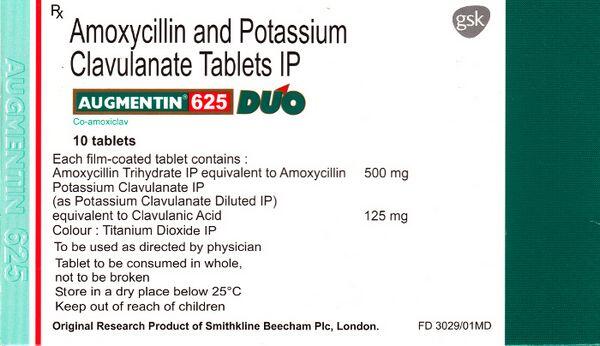
Amoxicillin and clavulanate potassium is available for oral use as film-coated tablets containing a 2:1 or 4:1 ratio of amoxicillin to clavulanic acid; as scored tablets containing a 7:1 ratio of amoxicillin to clavulanic acid; as chewable tablets containing a 4:1 or 7:1 ratio of amoxicillin to clavulanic acid; as extended-release tablets containing a 16:1 ratio of the drugs; or as a powder for oral suspension containing a 4:1, 7:1, or 14:1 ratio of the drugs.
Although commercially available amoxicillin and clavulanate potassium contains amoxicillin as the trihydrate and clavulanic acid as the potassium salt, the potency of amoxicillin is calculated on an anhydrous basis and the potency of clavulanate potassium is expressed in terms of clavulanic acid.
Amoxicillin occurs as a white, practically odourless, crystalline powder and is sparingly soluble in water. Clavulanate potassium occurs as an off-white, crystalline powder and is very soluble in water and slightly soluble in alcohol at room temperature. Clavulanic acid has a pKa of 2.7.
Each amoxicillin and clavulanate potassium film-coated tablet containing 250 or 500 mg of amoxicillin and 125 mg of clavulanic acid, or each scored tablet containing 875 mg of amoxicillin and 125 mg of clavulanic acid, contains 0.63 mEq of potassium. Following reconstitution as directed, each 5 mL of amoxicillin and clavulanate potassium oral suspension containing 125, 200, 250, 400, or 600 mg of amoxicillin contains 0.16, 0.14, 0.32, 0.29, or 0.23 mEq of potassium, respectively.
Each amoxicillin and clavulanate potassium chewable tablet containing 125, 200, 250, 400 mg, or 600 mg of amoxicillin contains 0.16, 0.14, 0.32, or 0.29 mEq of potassium, respectively.
Each amoxicillin and clavulanate potassium extended-release tablet containing 1 g of amoxicillin contains 0.32 mEq of potassium and 1.27 mEq of sodium. When reconstituted as directed, the oral suspensions have a pH of 4.8-6.8.
Amoxicillin and clavulanate potassium chewable tablets containing 200, 400, or 600 mg of amoxicillin and amoxicillin and clavulanate potassium oral suspension containing 200 or 400 mg of amoxicillin per 5 mL contain aspartame; following metabolism of aspartame in the GI tract, each 200 mg or 400 mg chewable tablet provides 2.1 or 4.2 mg of phenylalanine, respectively, and each 5 mL of amoxicillin and clavulanate potassium oral suspension containing 200, 400, or 600 mg of amoxicillin provides 7 mg of phenylalanine.
Commercially available amoxicillin and clavulanate potassium film-coated tablets, scored tablets, chewable tablets, extended-release tablets, and powder for oral suspension should be stored in tightly closed containers at a temperature of 25°C (77°F) or lower; avoid exposure to excessive humidity. Following reconstitution, oral suspensions of amoxicillin and clavulanate potassium should be stored at 2-8°C (36-46°F), and any unused suspension should be discarded after 10 days.

I'm in Geelong. Can I enter my postcode before paying to see whether these tablets can be delivered to my address?
Yes. Enter your Geelong postcode at checkout to check whether delivery is available for your address before you complete the order.
My parcel arrived in Perth after a very hot day. What should I check before I use the tablets?
Keep the tablets in their original container and check the package, tablets, lot and expiry details for damage, moisture, discolouration or other changes. They should be stored at or below 25°C.
I live in Mount Isa, well outside a major city. How can I find out whether you can deliver this medicine to my area?
Use your Mount Isa postcode at checkout to check delivery availability for your address. Availability can vary by destination, so checkout is the appropriate way to confirm it before ordering.
I had hives after penicillin when I was younger. Can I start these tablets for my infection?
Do not start amoxicillin and clavulanic acid until the prescriber or pharmacist has assessed that allergy history. It is a penicillin antibiotic and can cause serious allergic reactions, including in people with previous reactions to penicillins or other beta-lactam antibiotics.
| Active ingredient | Amoxicillin and clavulanic acid |
|---|---|
| Drug class | Penicillin antibiotic with a beta-lactamase inhibitor |
| Dosage form | Film-coated tablets |
| Available strengths | 250 mg/125 mg, 500 mg/125 mg, 875 mg/125 mg |
| Route | Oral |
| Storage | Store at or below 25°C in the original container. |
| ATC code | J01CR02 |
This product has 11 ratings, but only 3 written reviews so far. Share your experience and help other customers.
A solid order overall.
Augmentin was excellent.
Really happy with the generic.


