Do you have arthritis or ulcerative colitis? In Australia, you may be prescribed sulfasalazine for these conditions. In Australia, your GP or specialist may recommend it as part of ongoing care. However, like any medicine, it should be taken carefully after checking the instructions and making sure it's suitable for you. Learn more about sulfasalazine, including its benefits and possible side effects.
What Is Azulfidine (Sulfasalazine)?
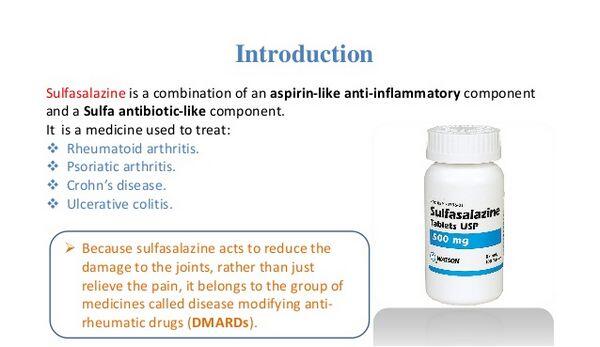
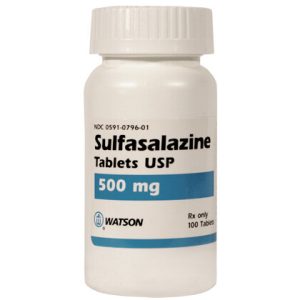
Sulfasalazine is a medicine available as tablets to take by mouth. Azulfidine is the brand name.
Why is Azulfidine prescribed? Rheumatoid arthritis, juvenile arthritis and ulcerative colitis can cause significant pain and inflammation. Azulfidine is a medicine that helps reduce inflammation and relieve pain. It is often prescribed when other medicines have already been tried but haven't worked well enough. This medicine can also reduce swelling, which is a key symptom in many types of arthritis. Some people with mild stomach pain may also benefit from Azulfidine (sulfasalazine). If your pain is severe, your doctor may prescribe other medicines to use together with sulfasalazine.
How to Take Sulfasalazine
"How should I take Azulfidine (sulfasalazine)?" is an important question to ask your doctor or pharmacist, because the dose can vary. Several factors can affect your dosing schedule, especially your current health condition. If your condition is more severe, you may be prescribed a higher dose. Tell your doctor about all of your health problems, as your dose may need to be adjusted from the general instructions. Pay attention to how your body responds when you first start taking the medicine. Age also matters when working out how much you should take.
Sulfasalazine conventional and delayed-release tablets are taken by mouth. The daily dose should be divided evenly and taken after meals. Delayed-release tablets should be swallowed whole.
Dosage for Ulcerative Colitis
The dose of sulfasalazine (Azulfidine) varies depending on age and the condition being treated.
For the treatment of ulcerative colitis, the interval between doses of sulfasalazine given as conventional or delayed-release tablets should not exceed 8 hours. The response to sulfasalazine in ulcerative colitis can be assessed using clinical signs such as fever, weight changes, and the severity and frequency of diarrhoea and bleeding, as well as by sigmoidoscopy and assessment of biopsy samples.
Continuing sulfasalazine treatment may still be necessary even after symptoms, including diarrhoea, have been brought under control. When endoscopy confirms satisfactory improvement, the dose may be reduced to a maintenance dose.
If diarrhoea returns, the dose should be increased back to the previously effective dose. People with ulcerative colitis should be advised that the disease rarely goes away completely, and that continuing maintenance doses of sulfasalazine may reduce the risk of relapse.
The usual initial adult dosage of sulfasalazine given as conventional or delayed-release tablets for treating ulcerative colitis is 3-4 g daily in equally divided doses. In some patients, starting with 1-2 g daily may help reduce gastrointestinal (GI) side effects. Although doses up to 12 g daily have been used, doses above 4 g daily are associated with a higher rate of side effects.
Some clinicians recommend avoiding doses above 4 g a day unless the serum concentration of total sulfapyridine and the patient's phenotype are known. The usual adult maintenance dose is 2 g daily in 4 divided doses. However, some clinicians support a lower maintenance dose of 1-1.5 g daily to help prevent side effects. The effectiveness of maintenance treatment is dose-related, but the possible benefit of doses above 2 g daily must be weighed against the increased risk of side effects and the need for closer monitoring.
When sulfasalazine is given as conventional tablets for treating ulcerative colitis in children 2 years and older, the usual initial dose is 40-60 mg/kg/day in 3-6 divided doses. The usual maintenance dose is 30 mg/kg/day in 4 divided doses. When sulfasalazine is given as delayed-release tablets for treating ulcerative colitis in children 6 years and older, the usual initial dose is 40-60 mg/kg/day in 3-6 divided doses. The usual maintenance dose is 30 mg/kg/day in 4 divided doses.

Dosage for Rheumatoid Arthritis
This medicine can be taken from 18 years of age. For the treatment of rheumatoid arthritis, the interval between doses of sulfasalazine given as delayed-release tablets is usually 12 hours. The usual adult dosage of sulfasalazine given as delayed-release tablets for managing rheumatoid arthritis is 2-3 g daily in equally divided doses. Starting with 0.5-1 g daily may help reduce GI side effects. Do not start with a high dose of Azulfidine, as you may get stomach pain.
| Week of Therapy |
Morning Dose (g) |
Evening Dose (g) |
Total Daily Dose (g) |
| 1 |
0.5 |
0.5 |
0.5 |
| 2 |
0.5 |
1.0 |
1.0 |
| 3 |
0.5 |
1.0 |
1.5 |
| 4 and beyond |
1.0 |
1.0 |
2.0 |
A response to sulfasalazine, shown by improvement in the number and extent of actively inflamed joints, may occur after 4-12 weeks of treatment. Patients taking more than 2 g daily should be monitored carefully.
Dosage for Juvenile Arthritis
The usual dosage of sulfasalazine given as delayed-release tablets for managing polyarticular course juvenile rheumatoid arthritis in children 6 years of age and older is 30-50 mg/kg/day in 2 equally divided doses; the maximum dose is usually 2 g daily. To reduce GI intolerance, the manufacturer recommends starting children on 1/4 to 1/3 of the planned maintenance dose and increasing it at weekly intervals until the planned maintenance dose is reached, usually by week 4.
Take as Directed
Azulfidine does not work quickly. It can take some time before the medicine starts to help. Follow your doctor's instructions and keep taking it for as long as needed for your condition. If your condition is severe, the treatment period may be longer. Do not stop taking the medicine whenever you want, because this may cause side effects. Your condition may get worse if you stop taking sulfasalazine without medical advice.
Another important point is to take the medicine exactly as prescribed. If you take it at irregular times or do not follow the instructions, it may be less effective. You are more likely to get the intended benefit if you take it regularly in the prescribed amount. Sulfasalazine needs to build up in your body to help manage your condition.
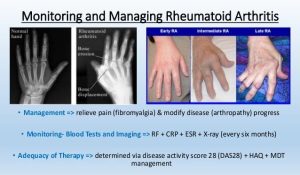
"How will I know if the medicine is working for me?" In general, your joint pain should improve or become less severe than it was before treatment.
Sulfasalazine Side Effects
Like any medicine, this drug may cause side effects. That does not mean you will definitely get them, but it is important to know what they might be. Some side effects of Azulfidine (sulfasalazine) are more common, while others are rare but more serious. Knowing what to look out for can help you understand what may happen after taking the medicine.
In general, severe side effects caused by sulfasalazine are uncommon, but milder ones happen fairly often. Side effects usually begin within a few days to 12 weeks after starting treatment, especially when the dose is above 4 g daily.
Patients with Ulcerative Colitis
Clinical experience so far suggests that the rate of sulfasalazine-related side effects in patients with ulcerative colitis is generally similar to that seen in patients with rheumatoid arthritis. The most common side effects linked to sulfasalazine treatment in ulcerative colitis are loss of appetite, headache, nausea, vomiting, stomach upset, and reversible oligospermia.
Other side effects reported in patients with ulcerative colitis include itching, hives, rash, fever, Heinz body anaemia, haemolytic anaemia, and cyanosis. Side effects reported in patients with rheumatoid arthritis taking sulfasalazine include nausea, dyspepsia, headache, abdominal pain, vomiting, fever, dizziness, stomatitis, rash, pruritus, abnormal liver function test values, leukopenia, and thrombocytopenia; reversible immunoglobulin suppression, rarely accompanied by clinical findings, has been observed in sulfasalazine-treated patients with rheumatoid arthritis.
Patients with Rheumatoid Arthritis
There do not appear to be any side effects that are specific to people with rheumatoid arthritis. However, rash is reported more often in patients with rheumatoid arthritis than in those with ulcerative colitis, occurring in 13% and 3.3% of patients respectively. Most patients with side effects, apart from rashes, have serum total sulfapyridine concentrations above 50 mcg/mL. The ability to acetylate sulfasalazine may affect when side effects start and how severe they are. In one study, 86% of patients who had side effects were slow acetylators of sulfapyridine.
GI Effects
You may notice a reduced appetite while taking sulfasalazine. Many patients report loss of appetite during treatment. In some cases, this is linked to nausea, which may also occur with sulfasalazine. Headaches and sometimes dizziness are also common side effects, and they may last for a short time before settling on their own.
Nausea, vomiting, stomach upset, diarrhoea, and loss of appetite occur frequently in patients taking sulfasalazine. The manufacturer suggests that GI intolerance after the first few doses is probably caused by irritation of the lining of the gut and may improve if the total daily dose is spread more evenly across the day or if enteric-coated tablets are used. However, there have been no definitive studies comparing the toxicity of enteric-coated and uncoated tablets.
Symptoms that occur after the first few days of sulfasalazine treatment are probably due to high serum concentrations of total sulfapyridine. They may improve if the dose is halved and then gradually increased again over several days. If symptoms continue, the medicine should be stopped for 5-7 days and then restarted at a lower daily dose.
There have been isolated reports of enteric-coated sulfasalazine tablets passing through the GI tract intact in some patients, possibly because they lack the intestinal esterases needed to break down the coating. If this happens, additional enteric-coated tablets should not be given.
Sensitivity Reactions
You may also notice itching, which can be a sign of an allergic reaction.
If a hypersensitivity reaction occurs during sulfasalazine treatment, the medicine should be stopped immediately. Desensitisation to sulfasalazine may be used if restarting treatment is considered necessary in a patient who has had a hypersensitivity reaction to the medicine. However, desensitisation should not be attempted in patients with a history of agranulocytosis, toxic epidermal necrolysis, fibrosing alveolitis, or anaphylactoid reaction while taking sulfasalazine.
Specialist references should be consulted for specific information on desensitisation procedures and dosing. Although various desensitisation procedures have been reported to work, many regimens use an initial sulfasalazine dose of 50-250 mg daily, which is then doubled every 4-7 days until the desired therapeutic dose is reached. If sensitivity symptoms return, the medicine should be stopped.
If you develop fever, pale skin, unexplained spots on the skin, other skin problems, a sore throat, or sudden pain when passing urine, contact your doctor straight away.
Other Adverse Effects
A few cases of pulmonary eosinophilia and at least one fatal case of fibrosing alveolitis have been reported in patients taking sulfasalazine. Sulfasalazine may turn alkaline urine and the skin an orange-yellow colour.
Some men notice a reduced sperm count after starting this medicine. If this happens, it is a known side effect. After treatment with sulfasalazine (Azulfidine) is stopped, sperm count usually returns to normal.
It is impossible to predict exactly which side effects of Azulfidine you may get, because each person responds differently. The side effects listed here have been reported in patients, but that does not mean you will have any of them. You may also experience a side effect that is not listed here.
What Other Drugs Will Affect Sulfasalazine?
It is important to check which medicines may interact with sulfasalazine before starting treatment. Some interactions can affect how the medicine works. It may be less effective or may take longer to start working. Below are some examples of medicines that can interact with sulfasalazine.
- Folic acid. Azulfidine may reduce how well folic acid is absorbed. A higher dose of vitamin B9 may be needed if you take this medicine together with a supplement. However, do not increase the dose without checking with your doctor.
- Heart medicines. If you take medicines for heart conditions, make sure they do not interact with sulfasalazine, otherwise they may not work as well. For example, digoxin should not be combined with Azulfidine without medical advice, because sulfasalazine can affect its absorption.
- Disease-modifying antirheumatic drugs. Some medicines in this group may increase side effects when taken at the same time as sulfasalazine (Azulfidine). Many patients report nausea when taking methotrexate together with sulfasalazine (Azulfidine).
The medicines mentioned above are only examples of drugs that can interact with Azulfidine. The full list may be longer. You should tell your doctor if you take any other medicines with sulfasalazine to help avoid unexpected side effects. Your Australian pharmacist can advise whether you should keep taking this medicine or wait until another treatment course has finished.
Overdose
Make sure you do not take too much of this medicine. A larger dose may cause nausea, stomach pain, and other unwanted effects. If you think you have taken too much, go to an emergency department straight away, as large doses of Azulfidine can be poisonous. Do not delay seeking medical help if you realise you have taken more than prescribed.
Missed Dose
Many people think they should take an extra dose when they realise they have missed one. You should only take the missed dose if you remember it soon after. If it is nearly time for your next dose, do not take a double dose, as this may lead to an overdose.
Important Warnings
Read the important warnings carefully to help avoid serious side effects, some of which can be fatal.
Refills
You may be given repeat prescriptions by the healthcare professional who prescribed Azulfidine. This means that in Australia, you may not need a new prescription every time you need more medicine.
Clinical Monitoring
Clinical monitoring is important to check how the medicine is affecting your body. During Azulfidine treatment in Australia, you may need regular doctor visits and standard blood tests. Early in treatment, blood tests are often needed because of the risk of infection linked to the medicine. You may also need liver function tests, as the drug can affect the liver. If you have kidney problems, tell your doctor so they can arrange kidney tests to help prevent possible side effects.
Your Diet
You can usually keep eating your normal foods. The main thing to remember is that sulfasalazine can affect folic acid absorption. Ask your doctor whether you need to take extra folic acid.
Sun Sensitivity
Avoid sunbathing and tanning while taking sulfasalazine. The medicine can make your skin more sensitive to sunlight. If you are taking it during summer, use sunscreen with UV protection.
Is Sulfasalazine Safe to Use During Pregnancy or While Breastfeeding?
Reproduction studies in rats and rabbits using sulfasalazine doses up to 6 times the usual human dose have not shown evidence of harm to the fetus. Sulfasalazine has been used to treat inflammatory bowel disease, including Crohn's disease and ulcerative colitis, during pregnancy.
Although fetal abnormalities have occasionally been reported in infants born to women with inflammatory bowel disease who received sulfasalazine alone or together with corticosteroids during pregnancy, most evidence suggests that sulfasalazine is not linked to a substantial risk of teratogenicity and that the potential benefits of treatment generally appear to outweigh the possible risks in pregnant women with this disease.
Although most experience with sulfasalazine in pregnancy has been in women with inflammatory bowel disease, the safety of the medicine in pregnant women with rheumatoid arthritis is not expected to be different. Sulfasalazine treatment can generally be continued in pregnant women with rheumatoid arthritis. Some clinicians consider sulfasalazine the disease-modifying antirheumatic drug (DMARD) of choice in women who are planning pregnancy or who are pregnant. The risk of sulfasalazine-induced kernicterus in newborns exposed during the last trimester appears to be low. Agranulocytosis has been reported in a newborn whose mother received sulfasalazine and corticosteroid treatment throughout pregnancy.
The effect of the medicine on later growth, development, and functional maturation in children whose mothers received sulfasalazine during pregnancy has not been determined. Because there are no adequate and well-controlled studies of sulfasalazine in pregnant women, the medicine should be used during pregnancy only when clearly needed.
Impairment of male fertility was seen in reproduction studies in rats using sulfasalazine doses of 800 mg/kg/day. Oligospermia, abnormal sperm forms, reduced sperm motility, and infertility have occurred in men taking sulfasalazine; however, these effects appear to be reversible after stopping the medicine. These effects appear to be caused by sulfapyridine, not 5-aminosalicylic acid (mesalamine), on sperm maturation.
If you are breastfeeding and want to take sulfasalazine (Azulfidine), keep in mind that some of the medicine can pass into breast milk. Do not take it without medical advice. Otherwise, your baby may experience side effects.
Mutagenicity and Carcinogenicity
In carcinogenicity studies in rats and mice, an increased incidence of urinary bladder transitional cell papillomas was observed in male rats, an increased incidence of urinary bladder transitional cell papilloma of the kidney was observed in female rats, and an increased incidence of hepatocellular adenoma or carcinoma was observed in male and female mice.
Allergy Warning
It is important to tell your doctor about any allergic reactions you have ever had to medicines containing the same active ingredient as Azulfidine. Allergic reactions can be serious. If you are not sure whether you are allergic to sulfa medicines, do not try a small dose on your own. Seek medical advice first. Call emergency services immediately if you develop trouble breathing or a sore throat.
Pediatric Precautions
The safety and effectiveness of sulfasalazine have not been established in children under 2 years of age with ulcerative colitis. For children aged 6 to 16 years with polyarticular-course juvenile rheumatoid arthritis, evidence from adequate, well-controlled studies in adults supports the safety and effectiveness of sulfasalazine.
Warnings for People with Certain Health Conditions
- People with asthma.
- People with porphyria.
These warnings apply to the groups listed above. If people with these conditions take Azulfidine, they may have side effects and their condition may get worse.
Storage
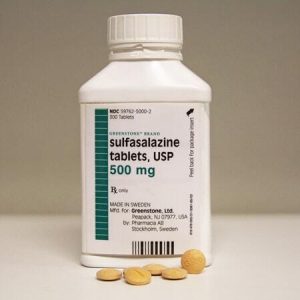
Store Azulfidine at room temperature, below 25°C. Do not refrigerate it, and do not store it in damp places.