Will Betnovate tubes survive the long trip to Perth?
Yes. Betnovate tubes are kept in their medicine packaging and placed inside a protective parcel. For long Australian routes, the parcel is packed to reduce movement during transport.


 AntiInfectiveMeds
Since 2010
AntiInfectiveMeds
Since 2010

| Quantity | Price per tube | You save | Total price | |
|---|---|---|---|---|
| 7 | A$8.70 | - | A$60.88 | |
| 8 | A$8.21 | A$3.86 | A$65.72 | |
| 9 | A$8.14 | A$5.02 | A$73.26 | |
| 10 | A$7.88 | A$8.17 | A$78.81 | |
| 12 | A$7.92 | A$9.35 | A$95.02 |
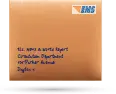
Your order is carefully packed and ships within 24 hours. Here is what a typical package looks like.
Sized like a regular personal letter (approximately 24x11x0.7 cm), with no indication of what is inside.

| Delivery Method | Estimated delivery |
|---|---|
| Express Free for orders over A$426.74 | Estimated delivery to Australia: 4-7 days |
| Standard Free for orders over A$284.50 | Estimated delivery to Australia: 14-21 days |












| Country | Brand Names |
|---|---|
| Australia | Betnovate Diprosone |
Betamethasone is a synthetic glucocorticosteroid for external use. It has high glucocorticosteroid activity and only minimal mineralocorticoid effect.
What does Betnovate cream do? When betamethasone is used topically, the cream may be absorbed to a lesser extent by normal, uninjured skin; systemic absorption of corticosteroids is expected only under unfavourable conditions (e.g., skin inflammation, prolonged treatment, or use under occlusive dressings).
Because of their anti-inflammatory, antipruritic, and vasoconstrictive effects, topical glucocorticosteroids such as betamethasone should preferentially be used to treat corticosteroid-sensitive dermatoses.
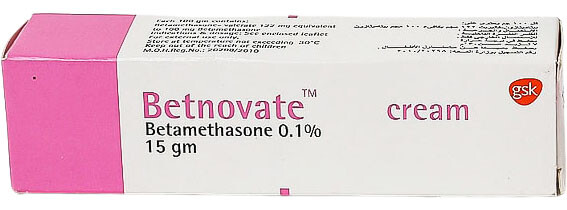
Active pharmaceutical ingredients:
Ingredients: caprylic/capric triglycerides, propylene glycol, Vaseline, emulsifier, purified water.
In Australia, betamethasone creams are available under several brand names, including:
These products are commonly prescribed for various inflammatory skin conditions.
In Australia, the Therapeutic Goods Administration (TGA) is the national regulatory authority responsible for approving medicines, including betamethasone creams. All the aforementioned brands are listed in the Australian Register of Therapeutic Goods (ARTG), indicating their approval for use in the country. The TGA's assessment process includes reviewing clinical data to ensure the safety and efficacy of medicines before approval.
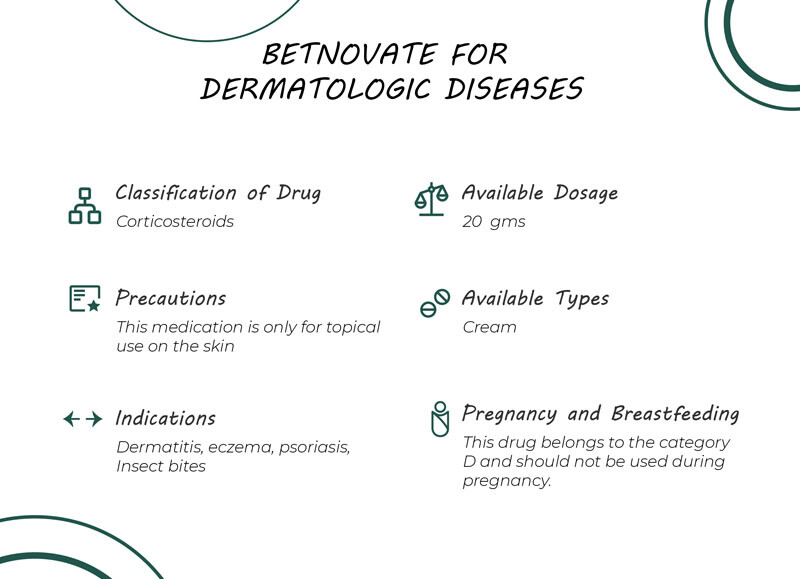
For reduction of inflammatory manifestations of dermatoses sensitive to GCS therapy, such as all types of eczema and dermatitis (including atopic eczema and photodermatitis), lichen planus, nodular prurigo, discoid lupus erythematosus, lipoid necrobiosis, pretibial myxedema, and erythroderma. It may also be effective in the treatment of psoriasis of the scalp and plaque psoriasis of the upper and lower extremities, except for widespread plaque psoriasis.
Betamethasone creams are classified as Schedule 4 (Prescription Only Medicine) in Australia. This means they can only be dispensed with a valid prescription from a licensed healthcare professional.
Betamethasone is contraindicated in patients with allergic reactions to any of the drug components.
Betamethasone is contraindicated in the following cases:
The use of betamethasone cream under occlusive dressings (plaster, etc.) is not recommended. Prolonged treatment and/or use over a large area of the skin should be avoided because the active ingredient may be absorbed.
Betamethasone has a pronounced dose-dependent effect on the metabolism of carbohydrates, proteins, and fats. It has a catabolic effect in lymphoid and connective tissue, muscles, adipose tissue, skin, and bone tissue. Osteoporosis and Itzenko-Cushing's syndrome are the main factors limiting long-term GCS therapy.
If you use betamethasone regularly and want to stop taking it, you should talk to your doctor before stopping this medicine, as your condition may get much worse if you stop taking it suddenly. If you have any further questions, contact your doctor or pharmacist.
Use Betnovate cream only according to the indication, route of administration, and dose given in the instructions for use.
Betamethasone creams are available in various formulations and strengths in Australia:
These formulations cater to different severities and types of skin conditions.
Method of administration
Eczema is a skin inflammatory disease with a variety of primary and secondary symptoms, including polymorphic rashes. Treatment of this dermatological pathology is a rather long and laborious process aimed at eliminating all irritating factors. It should be carried out as part of a comprehensive approach, which includes local therapy and desensitisation of the body and, if necessary, the correction of systemic diseases and autonomic disorders.
Betamethasone cream for eczema has an exfoliating, antipruritic, and soothing effect. It contributes to the restoration of damaged skin. It suppresses the action of pathogenic agents that have provoked the development of psoriasis or eczema. A positive effect is also achieved thanks to the soothing, moisturising, and disinfecting properties of these medicines.
What is the difference between eczema and atopic dermatitis? Modern science often groups these two conditions together because they exhibit the same symptoms (redness of the skin, itching, swelling, rash), are triggered by the same allergens (food, household, etc.), and are treated with the same drugs.
The main method of treatment of dermatitis and eczema is topical therapy with glucocorticosteroids. Some people are prejudiced against hormones and are afraid to use them even topically. However, there is no reason for such fears.
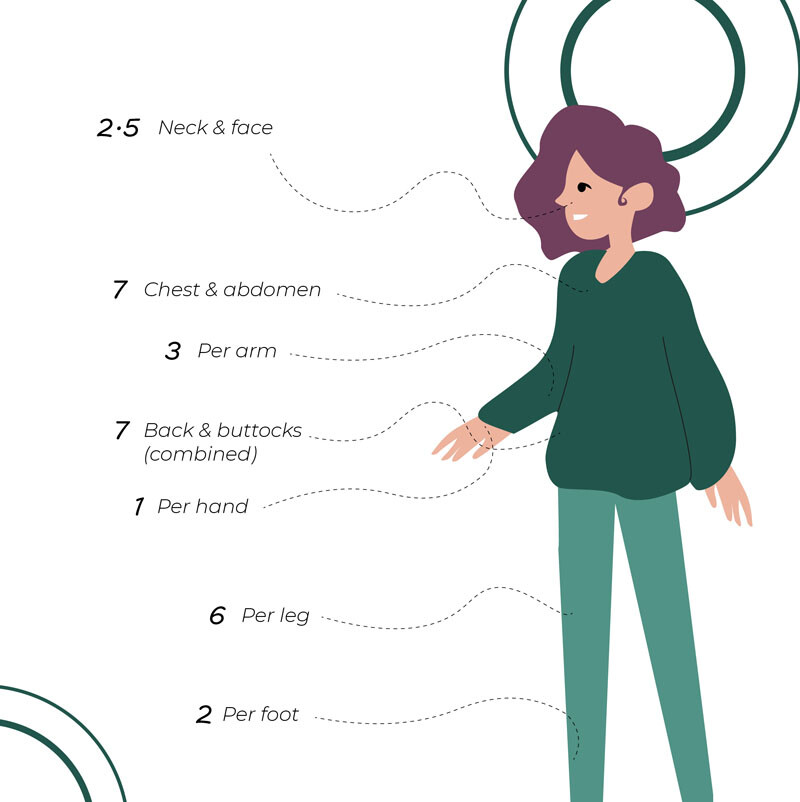
If you use GCS externally in the right mode (not more than 2 times a day, gently rubbing in a thin layer in an amount no greater than is necessary to cover the entire affected area, until the effect is achieved, but not more than for 4 weeks), there is no reason to fear adverse reactions. This is because topical agents act at the site of application without having a systemic effect on the entire body, as is the case with oral GCS.
Allergic contact dermatitis, unlike simple contact dermatitis, does not develop from the first contact with an irritant or the first exposure. It may take up to several weeks after initial contact for the allergic reaction (sensitisation) to develop. Then dermatitis develops on repeated contact. The inflammatory skin reaction is not consistent with the intensity of the irritant, which will not cause any changes in non-allergic people. The area of change on the skin may extend beyond the contact.
Simple dermatitis occurs acutely or chronically. Acute dermatitis is characterised by pronounced inflammation accompanied by itching, burning, pain, and sometimes by the formation of blisters and areas of necrosis that leave scars. If dermatitis occurs, it is better to see a doctor rather than self-treat. In the treatment of simple contact dermatitis, the main thing is to stop the irritant. Often patients, understanding the cause of the disease, cope with it on their own. However, there are cases (for example, severe chemical and thermal burns, frostbite) when a doctor's intervention is necessary.
Betamethasone cream meets the highest requirements for drugs used in dermatological practice for external application. It has minimal resorptive effect and practically no systemic effect. This is a major advantage of modern GCS-containing topical preparations over first-generation steroid ointments.
Modern pharmacology has made a lot of effort to ensure that the patient has a choice of highly effective psoriasis medicines that help against exacerbations and complications. Since the course of the disease is always individual and manifests itself differently in each patient, the treatment of the disease also depends on the individual case. The therapy of a multifactorial disease is always carried out in a comprehensive manner. The complex pathogenetic mechanism of psoriasis development leads to morphofunctional changes in the whole organism; that is why different pharmacological groups use drugs for the treatment of patients.
Betamethasone is an external form, which is the main one in the treatment of this disease. This is justified by the fact that first of all the skin is affected. When a special therapeutic cream is applied to the surface of the skin, its absorption occurs immediately, which carries the greatest therapeutic benefit. In this case, healthy areas of the skin are practically unaffected, which helps prevent the penetration of active elements into the systemic bloodstream. This is very important since many psoriasis medicines have certain side effects.
If the patient has psoriatic plaques on the elbows or knees, the doctor may recommend applying the cream under sealed occlusive dressings. However, this is usually recommended when applying the cream at night to enhance the effect. You should return to the normal cream application mode after a short period.
The frequency and severity of betamethasone side effects depend on the duration of betamethasone dipropionate use and the size of the dose used. High doses or prolonged use of GCS may cause marked mineralocorticoid and glucocorticoid effects that are considered side effects.
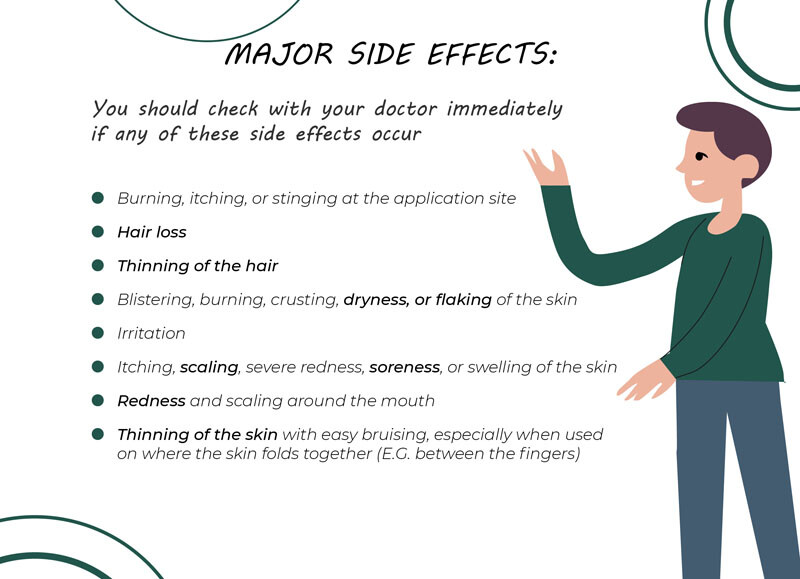
Common side effects reported with the use of betamethasone creams in Australia include skin irritation, such as burning, itching, or redness at the application site. Prolonged use may lead to skin thinning or stretch marks. Some individuals might experience allergic reactions, including rash or swelling. It's essential to use the medicine as directed to minimise potential side effects.
External betamethasone cream use may result in:
During long-term treatment it is necessary to carefully monitor growth and development dynamics in children, periodically perform ophthalmologic examination (to detect glaucoma, cataracts, etc.), regularly monitor the hypothalamic-pituitary-adrenal system function, blood and urine glucose content (especially in diabetic patients), serum electrolytes, and hidden blood in faeces. In the case of systemic use, EEG control is recommended.
Common side effects: Burning sensation, pain, irritation, or itching in the areas where the ointment is applied.
Serious side effects may occur with prolonged use: skin maceration, secondary infection, skin atrophy, local hirsutism, telangiectasia, sweating, purpura.
Allergies are genetic diseases, i.e., predisposition to develop allergies is inherited. For example, if one parent suffers from allergies, the likelihood of the child developing allergic diseases is 25-40%. If both parents suffer from allergies, the likelihood increases to 50-75%. It also depends on several other factors that contribute to the emergence of allergies in children, which include the level of antigenic load (living conditions, improper diet) and the environment.
When used systemically, the therapeutic activity of betamethasone is due to its anti-inflammatory, anti-allergic, immunosuppressive, and antiproliferative effects. When used topically, the therapeutic activity of betamethasone is due to anti-inflammatory, anti-allergic, and anti-exudative effects (due to the vasoconstrictor effect).
Excessive or prolonged use of topical corticosteroids may cause suppression of pituitary-adrenal function, resulting in secondary adrenal insufficiency.
Although acute overdose is unlikely, a chronic overdose may occur with excessive or prolonged use and may lead to hypercorticism: hyperglycaemia, glucosuria, reversible depression of adrenal function, Icenko-Cushing's syndrome.
Gradual withdrawal of the medicine and, if necessary, symptomatic treatment is recommended.
Prolonged external application on the face is not recommended; rosacea, perioral dermatitis, and acne may develop. The course of treatment should not exceed 5 days.
During prolonged treatment, if the medicine is applied to a large surface of the body, as well as in axillae and groin folds, when using occlusive dressings or nappies, systemic absorption of glucocorticosteroids is possible.
Consult your doctor or pharmacist before using betamethasone:
If in any doubt about your condition, ask your doctor or pharmacist before using betamethasone.
If you are pregnant or breastfeeding, think you may be pregnant, or are planning a pregnancy, consult your doctor or pharmacist before taking this medicine.
Due to the presence of white soft paraffin and mineral oil, applying betamethasone cream in the anogenital area may damage the structure of latex condoms and reduce their safety when used during treatment.
Store in the original container at a temperature not exceeding 25°C. Do not freeze. Keep out of the reach of children.

Will Betnovate tubes survive the long trip to Perth?
Yes. Betnovate tubes are kept in their medicine packaging and placed inside a protective parcel. For long Australian routes, the parcel is packed to reduce movement during transport.
I work outdoors in Queensland. Can I use Betnovate like a daily moisturiser?
No. Betnovate is a corticosteroid cream, not a daily moisturiser. Use it only for the condition and duration your doctor advised, and avoid applying more often than instructed.
Can I cover Betnovate with a bandage after applying it at work?
Do not cover Betnovate with a tight or occlusive dressing unless your doctor told you to. Covering treated skin can increase steroid absorption.
Will the parcel show Betnovate on the outside if it is delivered to my workplace?
No. The outside parcel is plain and does not say what is inside. The medicine packaging is kept inside the parcel.
| Active ingredient | Betamethasone valerate |
|---|---|
| Drug class | Potent topical corticosteroid |
| Dosage form | Topical cream |
| Available package | 20 g cream tubes |
| Route | Topical |
| ATC code | D07AC01 |
This product has 100 ratings, but only 3 written reviews so far. Share your experience and help other customers.
I'm very happy with Betnovate.
The Betnovate order was carefully packed inside and arrived undamaged.
Everything went smoothly.


