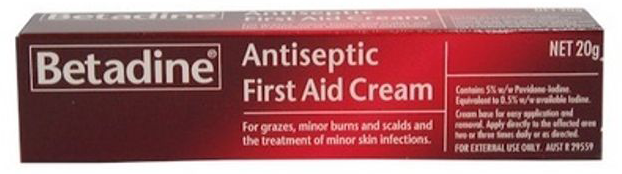
Even a minor cut or burn can become a real problem if it gets infected. Betadine, which contains povidone-iodine as its active ingredient, works as an antiseptic. This means it can help prevent infection or slow it down if it is already present in the wound. In Australia, this is a common part of everyday first aid and wound care advice.
Povidone-iodine has been used in Australia since 1960.
What Is Betadine Used For?
Betadine works against many types of infectious organisms, including viruses, bacteria, fungi, fungal spores and even some protozoa. Because of this, it may be used for the treatment and prevention of:
- skin infections caused by bacteria and fungi;
- vaginal thrush;
- mixed and non-specific vaginal infections;
- trichomoniasis;
- infected open wounds (cuts, burns);
- disinfection of hands and the operation area before surgery;
If you compare Betadine yellow vs green bottle packaging, there is no difference between the two, as both contain a 10% Betadine solution.
Betadine is also available as a topical solution, spray, scrub and mouthwash (gargle).
How Should Betadine Be Used?
How you use Betadine depends on where the infection or wound is and which form you are using. Betadine comes in several forms, including powder, vaginal suppositories and solution.
For intravaginal use of Betadine, a yeast infection may improve after a week of daily treatment. Insert one Betadine 200 mg suppository deep into the vagina once a day before bed. If the infection has not cleared during this time, treatment may continue for another week.
The use of Betadine for acne is linked to its antiseptic action against bacteria that may contribute to blocked pores and inflamed skin. By cleansing the affected area, it may help reduce surface bacteria and support healing. As a result, the appearance of the skin may improve.
Betadine should be used as a spot treatment. Apply a thin layer to the pimple. Make sure the area is clean and dry before applying the medicine.
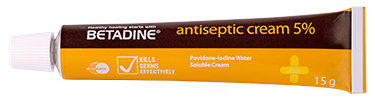
Unlike regular iodine, Betadine on open wounds may be used because it contains no alcohol, so it is less likely to irritate damaged tissue.
In Australia, Thomas V. Riley, PhD, Professor of Microbiology, has conducted studies on povidone-iodine.
Betadine may be used not only for treatment but also to help prevent infection. That is why it can be useful to keep it in your first aid kit.
Betadine Warnings and Contraindications
Because iodine is a key ingredient in this medicine, some people should avoid using it. These include:
- patients with hyperthyroidism or other thyroid problems;
- patients with an allergy to iodine or any other ingredient in the product;
- patients with kidney impairment.
In addition, in Australia, Betadine should not be used in people who have had treatment with radioactive iodine (for example, for thyroid cancer). The medicine may interact with some other medicines and supplements, for example when used together with lithium-containing products. That is why in Australia you should tell your healthcare provider about all medicines you are currently using.
When used intravaginally, Betadine may damage latex condoms. That is why it is better to use additional contraception during treatment and for 5 days after finishing treatment with Betadine vaginal suppositories.
Because of its antiseptic properties, the medicine may act as a spermicide. Because of this, Betadine may affect a woman's ability to become pregnant. It is best not to use it if you are trying to get pregnant.
Can You Use Betadine During Pregnancy and Breastfeeding?
Betadine's active ingredients can cross the placenta. Although it is not known to cause congenital abnormalities, it may affect the function of the pituitary gland in an unborn baby or make a newborn hypersensitive to iodine.
Regular use during pregnancy may be harmful to the baby. However, it may be used for a short time under medical supervision when clearly needed. One clinical trial conducted by Hungarian scientists reported no danger from Betadine use in pregnant women at 37-40 weeks of gestation, as the risk of developing hypothyroidism in mature fetuses is very low.
What Are the Possible Side Effects?
When Betadine is applied to the skin, side effects are more likely if it is used on large areas for long periods. However, most people do not have any harmful effects.
The most common reactions to Betadine include:
- stinging and burning where it was applied;
- skin irritation or redness;
- hypersensitivity reactions to the medicine.
However, in extremely rare cases, when people use the product in a way that goes against their Australian doctor's advice, serious iodine poisoning is possible. It may present as:
- a metallic taste in the mouth;
- dyspepsia, diarrhoea;
- severe kidney impairment, inability to produce urine;
- eye irritation.
If you experience any of these signs, go to the nearest hospital promptly.