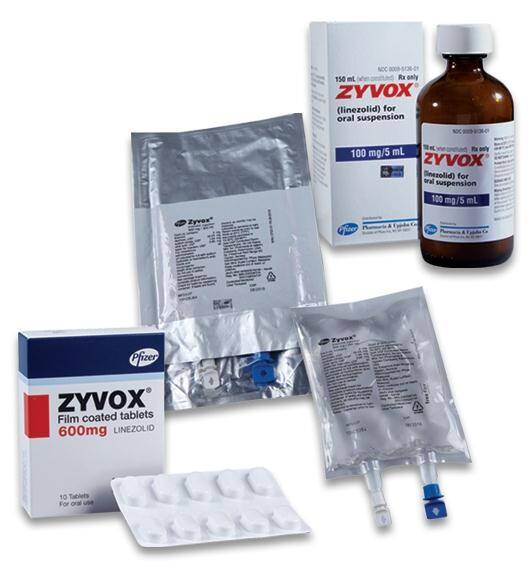
Zyvox (linezolid) is an oxazolidinone antibiotic used to treat certain serious infections caused by susceptible Gram-positive bacteria.
Drug class
Linezolid belongs to the oxazolidinone class of antibiotics.
How it works
Linezolid blocks bacterial protein synthesis at an early stage by preventing the formation of the 70S initiation complex.
What Zyvox tablets treat (and what they do not)
| Disease / condition (A-Z) |
Zyvox tablets |
| Community-acquired pneumonia (CAP) |
+ |
| Complicated skin and skin structure infections |
+ |
| Diabetic foot infection (without concomitant osteomyelitis) |
+ |
| Gonorrhoea |
- |
| Gram-negative infections (e.g., E. coli, Pseudomonas) |
- |
| Hospital-acquired / nosocomial pneumonia (HAP) |
+ |
| Osteomyelitis |
- |
| Pressure injuries (pressure ulcers) |
- |
| Uncomplicated skin and skin structure infections |
+ |
| Urinary tract infection (UTI) |
- |
| VRE (Enterococcus faecium) infection, including cases with concurrent bacteraemia |
+ |
| Viral infections (flu/common cold) |
- |
| Yeast or other fungal infections |
- |
Limitations of use (Australia): Zyvox is not indicated for the treatment of Gram-negative infections. If a Gram-negative pathogen is suspected or confirmed, appropriate treatment should be started.
Indications (US labelling)
Zyvox tablets are used for certain infections caused by susceptible Gram-positive bacteria, including pneumonia (hospital-acquired and community-acquired), skin and skin structure infections (complicated and uncomplicated), and vancomycin-resistant Enterococcus faecium (VRE) infections, including cases with concurrent bacteraemia.
Tablet strength
- Tablet: 600 mg (film-coated).
Can you split the tablet?
Zyvox 600 mg tablets are film-coated and are not described as scored tablets in Australian product information. For this reason, splitting or crushing is generally not recommended unless a clinician specifically advises it.
Other forms: Linezolid is also available in non-tablet forms (such as an oral suspension and an IV infusion) in some markets. Availability varies by country and supplier.
Why is Zyvox expensive? Are there alternatives?
Cost can be influenced by brand pricing, manufacturing and supply chain factors, and market conditions. Depending on the infection and culture/susceptibility results, clinicians may choose alternatives. TGA-registered generic linezolid tablets are available in Australia and may cost less than the brand in some cases.
What medicines is it used with?
Zyvox may be used on its own for confirmed susceptible Gram-positive infections. If an infection is mixed or a Gram-negative pathogen is suspected, clinicians may prescribe Zyvox together with other antibiotics that cover Gram-negative organisms and, when needed, anaerobes. The exact combination depends on the site of infection, its severity, and local resistance patterns.
Clinical studies in Australia
Clinical studies in Australia on linezolid have mainly looked at its use in serious Gram-positive infections, particularly methicillin-resistant Staphylococcus aureus and vancomycin-resistant enterococci, often in hospital settings. These studies generally found linezolid to be an effective alternative to glycopeptides, with strong oral bioavailability supporting step-down therapy and reducing the need for prolonged intravenous treatment. Australian reports have also highlighted the need for safety monitoring, especially for thrombocytopenia, anaemia, peripheral or optic neuropathy with prolonged use, and drug interactions related to monoamine oxidase inhibition.
Drug interactions
Linezolid is a reversible, non-selective MAO inhibitor (MAOI). It can interact with adrenergic drugs, which may raise blood pressure, and serotonergic drugs, which may increase the risk of serotonin syndrome. Tell your Australian clinician about all prescription, over-the-counter, and herbal products you use.
Linezolid has been used in Australia since 2001.
Contraindications
| Contraindication |
What it means |
| Hypersensitivity to linezolid (or any component of the product) |
Do not use if you have a known serious allergy to linezolid or any of the product ingredients. |
| Use with MAO inhibitors (or within 2 weeks of stopping an MAOI) |
Do not use with MAOIs (e.g., phenelzine, isocarboxazid, selegiline) or within 2 weeks of stopping them because of the risk of interactions. |
Tyramine (food interaction)
Because linezolid has MAOI activity, avoid consuming large amounts of tyramine-rich foods and drinks during treatment. Examples include aged cheeses, cured, aged or improperly stored meats, fermented foods (including some soy and yeast products), and certain alcoholic drinks (such as some beers and red wine). Seek medical help if you develop a severe headache, flushing, or a marked rise in blood pressure.
Side effects and key precautions
Common side effects include diarrhoea, nausea, vomiting, and headache.
Important warnings and precautions include myelosuppression (including thrombocytopenia; full blood counts are commonly monitored weekly), peripheral and optic neuropathy (reported mainly with treatment longer than 28 days), lactic acidosis, seizures, and C. difficile-associated diarrhoea. Report unusual bruising or bleeding, severe or persistent diarrhoea, or new visual symptoms straight away, including blurred vision or changes in visual acuity or colour vision.
Australian doctors advise confirming that linezolid is appropriate for your condition before use.
Storage
Store at 25°C. Excursions between 15°C and 30°C are permitted.