What Is Lamisil?
Lamisil cream is a topical treatment for a range of fungal infections of the skin. In Australian practice, it is commonly used for common superficial fungal skin infections seen in primary care and dermatology settings. It is generally well tolerated, with a low rate of reported side effects. The main active ingredient in the cream is terbinafine. This substance belongs to the allylamine group and has a broad range of antifungal activity. Even at relatively low concentrations, it has a fungicidal effect on most dermatophytes and dimorphic fungi.
Composition and Active Ingredients
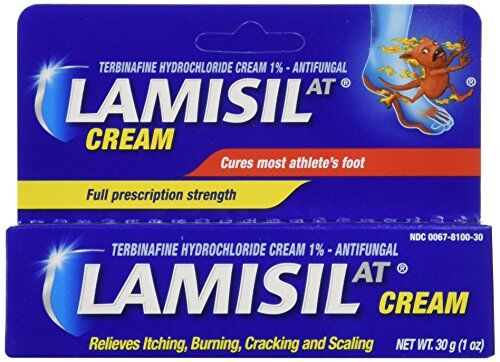
Lamisil formulations for topical use, such as creams or gels, contain terbinafine hydrochloride at a concentration of 1% w/w. One gram of the cream contains terbinafine hydrochloride 10 mg, equivalent to 8.8 mg of terbinafine. Other ingredients may include cetyl alcohol, stearyl alcohol and benzyl alcohol, which help give the product its texture and stability.
Terbinafine works by inhibiting squalene epoxidase, an enzyme needed for ergosterol synthesis in fungal cell membranes. This leads to fungal cell death and helps treat infections such as athlete's foot and onychomycosis. Less than 5% of the dose is absorbed when the medicine is applied to the affected skin area, so absorption into the bloodstream is negligible.
Uses
The effect of the medicine may be fungicidal or fungistatic. It also has a long-lasting effect, which may help patients not only get the desired result from using Lamisil cream but also reduce the chance of reinfection after a short course of treatment.
Lamisil (Terbinafine) is indicated for the topical treatment of the following dermatologic infections: tinea (pityriasis) versicolor due to Malassezia furfur (formerly Pityrosporum ovale), tinea pedis (athlete's foot), tinea corporis (ringworm), or tinea cruris (jock itch) due to Trichophyton rubrum, Trichophyton mentagrophytes, or Epidermophyton floccosum. Diagnosis of disease should be confirmed either by culture (except Malassezia furfur, formerly Pityrosporum ovale) or examination of scrapings from infected tissue mounted in a solution of potassium hydroxide.
Lamisil in the Treatment of Fungal Infections
Terbinafine specifically inhibits an early stage of sterol biosynthesis in fungal cell membranes. This causes a deficiency of ergosterol and intracellular accumulation of squalene, which leads to fungal cell death. Terbinafine acts by inhibiting the squalene epoxidase enzyme in the cell membrane. As this enzyme is not part of the cytochrome P450 system, terbinafine does not affect hormone metabolism in the human body.
Lamisil cream is used to treat various fungal skin infections, including tinea pedis (athlete's foot), tinea cruris (jock itch) and tinea corporis (ringworm).
For adults and children 12 years and older, Lamisil cream should be applied 1-2 times per day depending on the severity of the infection.
The duration of treatment depends on how severe the infection is.
- Interdigital toe web infections and/or dermatophyte infections of the torso - the cream should be used once a day for 1 week.
- Skin candidiasis - the cream should be used 1-2 times daily for 1 week.
- Multicoloured lichen - the cream should be used 1-2 times daily for 2 weeks.
Older patients do not require any dose adjustment. Clinical experience with the medicine in children under 12 years of age is limited, so it should not be used in this age group.
The cream should be applied to the affected area and the surrounding skin after the area has been cleaned and dried thoroughly. Avoid contact with the eyes, nose, mouth and other mucous membranes. If irritation occurs, stop using it. Using the cream consistently as directed is important for effective treatment, even if symptoms start to improve before the full course is completed.
Lamisil in the Treatment of Yeast Infections
The medicine may also be used in the treatment of yeast infections. Lamisil cream for penile yeast infection therapy has shown better results than treatment with many commonly prescribed antiseptic agents. The active ingredient penetrates deeply into the affected penile tissues. It also acts on the surface of the skin, helping to clear the affected area.
Lamisil cream for yeast nappy rash should be applied four times per day. If there is no improvement after three days, tell your healthcare provider so treatment can be reviewed or the daily dose adjusted.
Precautions
Lamisil is not for ophthalmic, oral or intravaginal use. The cream is for external use only. Use Lamisil exactly as directed by your doctor.
Noticeable relief is usually seen within two to three days of starting treatment. Irregular use or stopping treatment too early may lead to the infection coming back.
If there is no noticeable improvement after two weeks of treatment, contact your doctor. Additional dose adjustments may be needed.
Allergy Warnings
Lamisil (Terbinafine) is contraindicated in people with known or suspected hypersensitivity to terbinafine or any of its other ingredients. Tell your doctor if the treated area becomes more irritated or shows possible signs of sensitivity, such as redness, itching, burning, blistering, swelling or oozing.
Health Conditions Warnings
Terbinafine may be present in breast milk. For this reason, the medicine should not be used while breastfeeding. Pregnant women should also avoid applying Lamisil.
Lamisil 1% contains 11.3% v/v alcohol. If irritation or sensitivity develops, treatment should be stopped and appropriate treatment started. Lamisil may irritate the eyes. In case of accidental contact with the eyes, rinse them thoroughly with running water and consult a doctor if any symptoms persist.
Do not cover the affected areas with dressings unless your doctor tells you to.
There is no experience of overdose with topical formulations of terbinafine. However, the alcohol content (11.3%) of the cream should be taken into account.
Terbinafine Side Effects
In most clinical cases, side effects are rare and do not need medical attention. Possible side effects include:
- Local symptoms such as itching, peeling or burning of the skin, pain and irritation at the application site, pigmentation and erythema. These mild symptoms should be distinguished from hypersensitivity reactions, including rash, which may require treatment to be stopped.
- Eye irritation if terbinafine hydrochloride accidentally gets into the eyes.
- Pain at the application site.
- Irritation at the application site.
- Rarely reported worsening of symptoms of the fungal infection.
In clinical trials, none of the 262 patients treated with Lamisil (Terbinafine) stopped therapy because of adverse events. In patients treated with Lamisil (Terbinafine), adverse reactions considered possibly, probably, or related to treatment included skin disorder (1.9%), application site reactions (burning or irritation) (1.5%), and pruritus (1.1%). These adverse events were seen only in patients with tinea cruris: skin discolouration, hyperpigmentation (3/36), skin exfoliation (1/36), and contact dermatitis (1/36).
Interaction with Other Medicines
Potential interactions between Lamisil (Terbinafine) and other medicines have not been systematically evaluated.
Additional information
You can find more information about Lamisil cream (terbinafine) here:
After Using Lamisil
After using Lamisil cream, it is important to store and dispose of it properly.
Storage
Lamisil cream should be stored in its original packaging to protect it from light and moisture. Keep the tube tightly sealed and out of reach of children. Do not use the cream after the expiry date shown on the packaging. Once opened, an aluminium tube can typically be used for up to four months, while a laminated tube has a shelf life of one month.
Disposal
When disposing of Lamisil cream, do not throw it in household rubbish or pour it down the drain, as this can harm the environment. Ask your pharmacist about the proper way to dispose of it. Unused or expired medicines should be returned to a pharmacy for safe disposal to help protect the environment.