Containing two active ingredients, Lotrisone can help manage some inflammatory fungal skin infections. Clotrimazole helps control fungal growth, while betamethasone (a corticosteroid) reduces redness, itching and inflammation in the affected area. In Australia, a clinician or dermatologist may consider this combination when both antifungal treatment and short-term relief of inflammation are needed.
When do you need Lotrisone?
Lotrisone may be used for some fungal skin infections. To work out which organism is causing your symptoms, you should see an Australian clinician. You may also need tests to identify the cause.
For yeast-related skin infections, Lotrisone may be used only when the skin is affected. It should not be used for vaginal thrush or on mucous membranes. A typical course may last up to 2 weeks with twice-daily application, depending on the condition and your clinician's advice.
The preparation is commonly prescribed for ringworm, jock itch and athlete's foot.
Can Lotrisone be used for eczema?
No. Eczema is not a fungal infection, so Lotrisone is not appropriate and may be harmful if used incorrectly.
Australian doctors do not recommend buying clotrimazole/betamethasone unless you are sure it is suitable for your situation.
Dosage and instructions for use
Lotrisone is available as a cream or lotion. Both typically contain clotrimazole 1% and betamethasone 0.05% as the active ingredients, so you and your Australian healthcare provider can decide which formulation suits you best.
The length of treatment may vary depending on your progress and the condition being treated. For ringworm, Lotrisone is often used twice daily for at least 1 week. Even if symptoms improve sooner, complete the course as directed to help reduce the risk of it coming back.
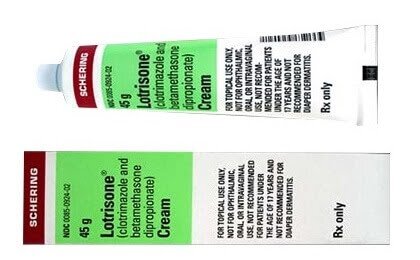
If symptoms are still present after 1 week, treatment may continue for another 7 days, depending on clinical advice. A similar approach may be used for jock itch. When treating a fungal infection in the groin, make sure your underwear is not tight and is made from natural fabrics to help reduce sweating and moisture.
Athlete's foot can be harder to treat and may require up to 4 weeks. The cream or lotion is usually applied twice a day, in the morning and at bedtime.
Rub the medicine gently into the affected areas of skin.
Can Lotrisone be used on the face?
Use it on the face only if a clinician has specifically advised you to do so. Avoid getting the cream or lotion into your eyes, nose or mouth.
Do not use more than 45 g of cream or 45 mL of lotion per week unless directed by a clinician, as using too much can increase the risk of side effects.
Who shouldn't use Lotrisone?
Some people should avoid Lotrisone. This includes people with:
- Known hypersensitivity to clotrimazole, betamethasone or any inactive ingredient in the medicine;
- Melanoma;
- Skin cancer;
- Haemangioma or other skin tumours;
- Circulation problems;
- Immunosuppression/low immunity.
Lotrisone is contraindicated in people younger than 17 years. Older adults should use the preparation under close supervision, as the risk of side effects may be higher. Never use this medicine by mouth or vaginally. Avoid getting it into the eyes and nose.
During pregnancy, Lotrisone should be used only if the potential benefits outweigh the risks and if advised by a clinician. If you are breastfeeding, speak with a healthcare professional before using it.
What unwanted reactions may occur?
The medicine is usually well tolerated when used as directed. However, side effects can occur. The most common local reactions include:
- Dry skin;
- Itching and redness;
- Peeling;
- Burning;
- Rash.
These reactions are usually limited to the areas where the medicine is applied. If you notice these symptoms, contact your clinician to discuss what to do next.
Rare but potentially serious effects have also been reported. Seek medical advice promptly if you notice:
- Fever;
- Difficulty passing urine;
- Skin discolouration or thinning;
- Stretch marks or acne-like eruptions;
- Headache;
- Nausea or vomiting.
This is not a complete list of possible reactions. Ask an Australian pharmacist or clinician for more information, and seek urgent medical help if symptoms are severe or worrying.